

windows glass replacement services can seem expensive, but with proper planning, comparing options, and choosing the right materials, you can keep costs manageable while ensuring long-term benefits.
Below is a quick reference table showing typical glass types, average replacement costs, and key features.
| Glass Type | Total Estimated Cost (AUD) | Glass Supply Cost (AUD) | Installation Cost (AUD) | Transport & Call-Out Fee (AUD) | Additional Costs (AUD) |
|---|---|---|---|---|---|
| Single-Pane Glass | $200 – $350 | $80 – $150 | $80 – $120 | $30 – $50 | $10 – $30 |
| Double-Glazed Glass | $400 – $700 | $220 – $400 | $120 – $180 | $40 – $60 | $20 – $60 |
| Tempered Glass | $600 – $900 | $300 – $550 | $150 – $220 | $40 – $80 | $30 – $50 |
| Laminated Glass | $600 – $1,050+ | $350 – $650 | $150 – $250 | $40 – $80 | $30 – $70 |
| Frosted or Tinted Glass | $500 – $800 | $250 – $500 | $120 – $180 | $40 – $60 | $30 – $60 |
Average Window Glass Replacement Cost by Types
Understanding the window glass replacement cost in Melbourne helps homeowners budget more accurately and avoid unexpected expenses. The final price depends on several factors, including the type of glass, window size, accessibility, and installation complexity.
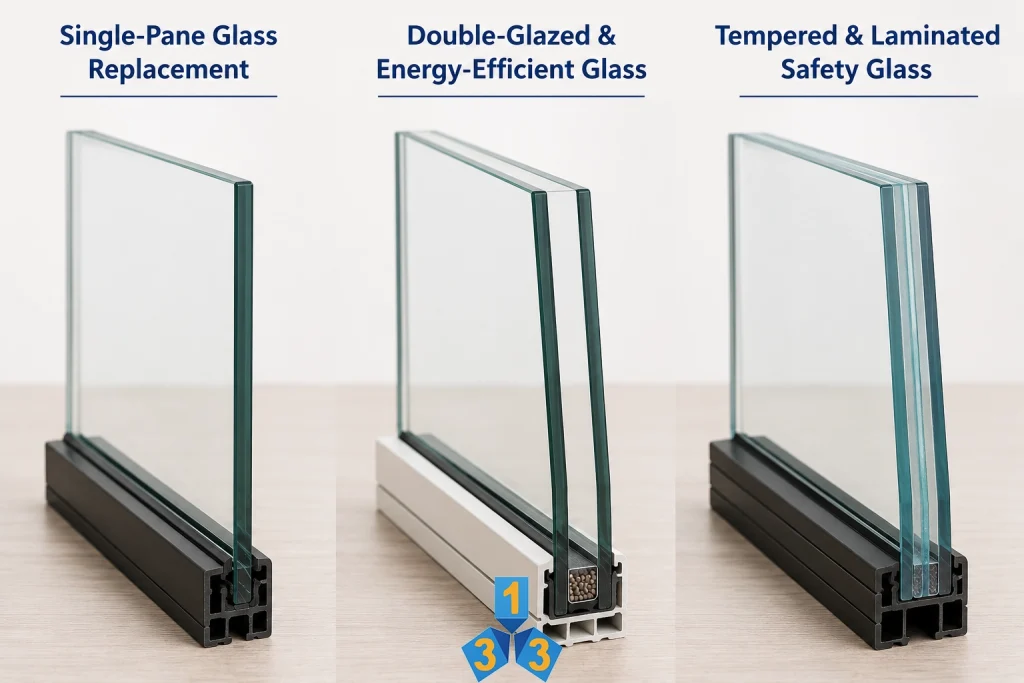
Single-Pane Glass Replacement
Single-pane glass is one of the most affordable options for residential properties.
Estimated Cost: AUD $200 – $350 (including installation)
Benefits of Single-Pane Glass
- Lower replacement cost
- Faster installation process
- Suitable for older homes and basic window systems
Things to Consider
- Limited thermal insulation
- Less effective at reducing outside noise
- Higher heating and cooling costs over time
Tip:
Single-pane glass offers the lowest upfront cost, but it may not be the most energy-efficient option in the long run.
Double-Glazed & Energy-Efficient Glass
Double-glazed windows provide superior insulation and are increasingly popular among Melbourne homeowners.
Estimated Cost: AUD $400 – $700
These units consist of two glass panes separated by an air or gas-filled space, helping to improve indoor comfort and reduce energy loss.
Key Advantages
- Better thermal performance
- Improved noise reduction
- Lower energy consumption
- Increased property value
Energy Saving Tip:
Although double-glazed glass costs more initially, many homeowners recover part of the investment through reduced energy bills over time.
Tempered & Laminated Safety Glass
Safety glass is commonly used in bathrooms, glass doors, shopfronts, and areas exposed to potential impacts.
Estimated Cost: From AUD $600+
Tempered Glass
- Heat-treated for additional strength
- Up to five times stronger than standard glass
- Breaks into small, less dangerous fragments
Laminated Glass
- Contains a protective interlayer
- Holds shattered glass together after impact
- Provides enhanced security and UV protection
⚠️ Safety Note:
Tempered and laminated glass are often required in locations where building regulations demand additional safety protection.
Factors That Affect Window Glass Replacement Cost
The price of replacing window glass depends on multiple factors:
- Glass Type and Thickness – The material you choose dramatically impacts the cost. Single-pane glass is inexpensive but less energy-efficient and less safe. Double-glazed, tempered, laminated, or frosted glass increases both material and installation expenses. Thicker panes provide durability but are heavier, requiring more labor to install.
- Window Size and Shape – Larger or uniquely shaped windows naturally cost more to replace. Standard rectangular windows are simpler and cheaper to handle, whereas bay, bow, or custom-arched windows often require tailored solutions and additional labor.
- Accessibility and Location – Windows that are difficult to reach, such as upper-story windows or external façades, may require scaffolding, lifts, or additional safety precautions, which increases labor costs. Easy-to-access windows are generally cheaper to replace.
- Additional Features – Tinted, patterned, or safety-coated glass adds to the material cost but enhances energy efficiency, privacy, and protection against breakage. While optional, these features are worth considering for long-term benefits.
Understanding these factors can help homeowners accurately estimate the window glass replacement cost and avoid surprises during the project.
Repair vs Dull Window Glass Replacement
Not all damaged glass needs full replacement. Minor chips, scratches, or small cracks can sometimes be repaired with resin-based methods. Repairs are often significantly cheaper, typically between AUD 50 and AUD 150 per window. However, if the glass is heavily damaged, foggy, or structurally compromised, replacement is the only viable solution. Attempting to repair extensively damaged windows can lead to recurring problems, higher maintenance costs, and reduced safety.
Full replacement ensures durability, proper insulation, and adherence to building codes. It also allows homeowners to upgrade to more energy-efficient or safety-oriented glass. By understanding whether repair or replacement is the best option, you can manage the window glass replacement cost more effectively and prevent unnecessary expenses in the future.
How to Save Money on Window Glass Replacement
Managing the window glass replacement cost doesn’t have to mean compromising on quality. By understanding the key strategies and making informed decisions, homeowners can significantly reduce expenses while ensuring durable and safe installations.
Get Multiple Quotes
One of the most effective ways to save money is to get multiple quotes from local glaziers. Contact at least three reputable professionals to compare not only material prices but also labor charges. Different installers may have varying experience levels, discounts, or package deals for multiple windows. By reviewing multiple estimates, homeowners can ensure they are paying a fair price and avoid overcharging.
When requesting quotes, provide detailed information about your windows, such as size, type of glass, and whether any special features like frosted or laminated panes are needed. This allows installers to give accurate, competitive pricing. Taking the time to compare quotes may initially seem tedious, but it often results in noticeable savings, sometimes hundreds of dollars per project.
Opt for Standard Sizes
Choosing standard-sized glass panes can also reduce replacement costs. Custom-cut or unusually shaped glass requires precise measurements, specialized cutting, and sometimes additional labor, all of which increase the overall window glass replacement cost.
Even small adjustments to your window layout can allow you to use pre-manufactured panes. For example, replacing a rectangular kitchen window with a standard size is often cheaper than ordering a custom pane. While custom shapes can improve aesthetics, homeowners should weigh whether the visual appeal justifies the added expense. Standard sizes strike a balance between affordability and quality.
Combine Multiple Replacements
If you have several windows that need attention, scheduling multiple replacements together can lower costs. Installers often offer discounted labor rates when performing several jobs in the same visit, as it reduces travel time, setup, and overall labor hours.
Combining jobs is particularly useful for homeowners who want to upgrade their glass for energy efficiency or safety. Rather than paying separate installation fees for each window, bulk replacement minimizes costs and ensures consistency in glass type and installation quality across your home.
Consider Energy-Efficient Upgrades and Rebates
While energy-efficient glass like double-glazed or Low-E windows can be more expensive upfront, they often qualify for government rebates or incentives in Melbourne. These rebates help offset the initial window glass replacement cost and reduce long-term energy bills.
Moreover, many manufacturers or certified installers provide warranties that cover certain types of damage or defects. Leveraging these warranties can prevent additional expenses if problems arise in the first few years. By combining strategic planning, research, and selecting reputable professionals, homeowners can reduce replacement costs while investing in durable and efficient glass solutions.
Signs You Need Window Glass Replacement
Knowing the early signs that indicate your windows need attention can save both money and potential safety issues. Timely action helps homeowners avoid emergency repairs and manage the window glass replacement cost efficiently.
Visible Cracks or Chips
One of the most obvious indicators of damaged glass is visible cracks or chips. Even minor cracks can expand over time due to temperature changes, wind, or accidental impact. Small chips in double-glazed windows may also compromise the seal, leading to moisture buildup between panes and reducing insulation efficiency.
Ignoring these issues can result in more extensive damage, which will increase replacement costs. Replacing cracked or chipped panes promptly ensures safety, maintains energy efficiency, and prevents minor issues from escalating into expensive repairs.
Condensation or Fogging
If you notice condensation or fogging between panes of double-glazed windows, it is a clear sign that the window seal has failed. Moisture trapped between the panes compromises insulation, making your home less energy-efficient. Over time, this can also lead to mold growth on window frames or surrounding walls, which can create health hazards and further maintenance costs.
Replacing or repairing windows with failed seals restores thermal performance, prevents structural damage, and improves comfort inside the home. Homeowners who act quickly often avoid additional labor costs associated with emergency replacements.
Drafts or Poor Insulation
Drafts or uneven temperature spots near windows often indicate compromised glass or frame issues. Drafts increase heating and cooling costs and can make rooms uncomfortable during Melbourne’s colder months.
Addressing these issues early helps maintain energy efficiency and reduces long-term utility bills. Whether caused by gaps in the frame, broken seals, or damaged panes, repairing or replacing the glass ensures consistent temperature control and comfort throughout your home.
Difficulty Opening or Closing
Windows that are hard to open or close may reflect structural problems, misaligned frames, or warped glass. Sticking or jammed windows not only cause inconvenience but can also worsen over time, making replacement more complex and expensive if ignored.
Regularly testing your windows and noting any difficulty in operation allows homeowners to detect issues early. Timely replacement prevents further damage and keeps your windows functioning smoothly for years.
Cloudy or Discolored Glass
Over time, glass can become cloudy or discolored, which affects both appearance and natural light inside your home. Aging or dulled glass may also reduce visibility and diminish overall aesthetic appeal.
Replacing windows with cloudy or yellowed panes not only restores clarity and brightness but also increases property value and enhances the indoor environment. Homeowners who monitor their windows regularly can plan replacements proactively and avoid emergency costs.
Additional Signs to Watch For
Other indicators include unusual noises when opening or closing windows, visible gaps along the frame, or water leakage during heavy rain. Any of these signs suggest the need for professional assessment and possible window glass replacement, ensuring safety, energy efficiency, and long-term durability.
Conclusion
Understanding the window glass replacement cost is essential for Melbourne homeowners. Multiple factors, including glass type, size, location, and labor, influence pricing, and making informed decisions ensures safety, comfort, and energy efficiency. Recognizing early signs of damage, comparing quotes, and considering energy-efficient or safety-oriented upgrades can help manage costs effectively. Whether opting for repair or full replacement, proactive planning and practical choices maintain both the functionality and appearance of your home. By staying informed and taking the right steps, homeowners can avoid unexpected expenses and enjoy the benefits of well-maintained windows.
Frequently Asked Questions
Does insurance cover window glass replacement?
Coverage depends on the policy. Accidental breakage is often covered, but wear-and-tear or poor maintenance usually is not. Check your policy carefully and provide documentation to support claims.
How long does replacement take?
Most standard windows can be replaced in 2–4 hours, depending on accessibility and glass type. Large or custom windows may require a full day or more.
Can I replace glass myself?
DIY is possible for small, single-pane windows but carries safety risks. Professional glaziers ensure correct sealing, compliance with regulations, and long-term durability.
How often should window glass be replaced?
High-quality glass lasts 15–30 years. Double-glazed or laminated glass can last longer, but environmental factors like storms, sun exposure, or accidental damage may shorten lifespan.
Are energy-efficient windows more expensive to replace?
Energy-efficient glass may have higher upfront costs, but it reduces heating and cooling bills over time, offering long-term savings and improved comfort.