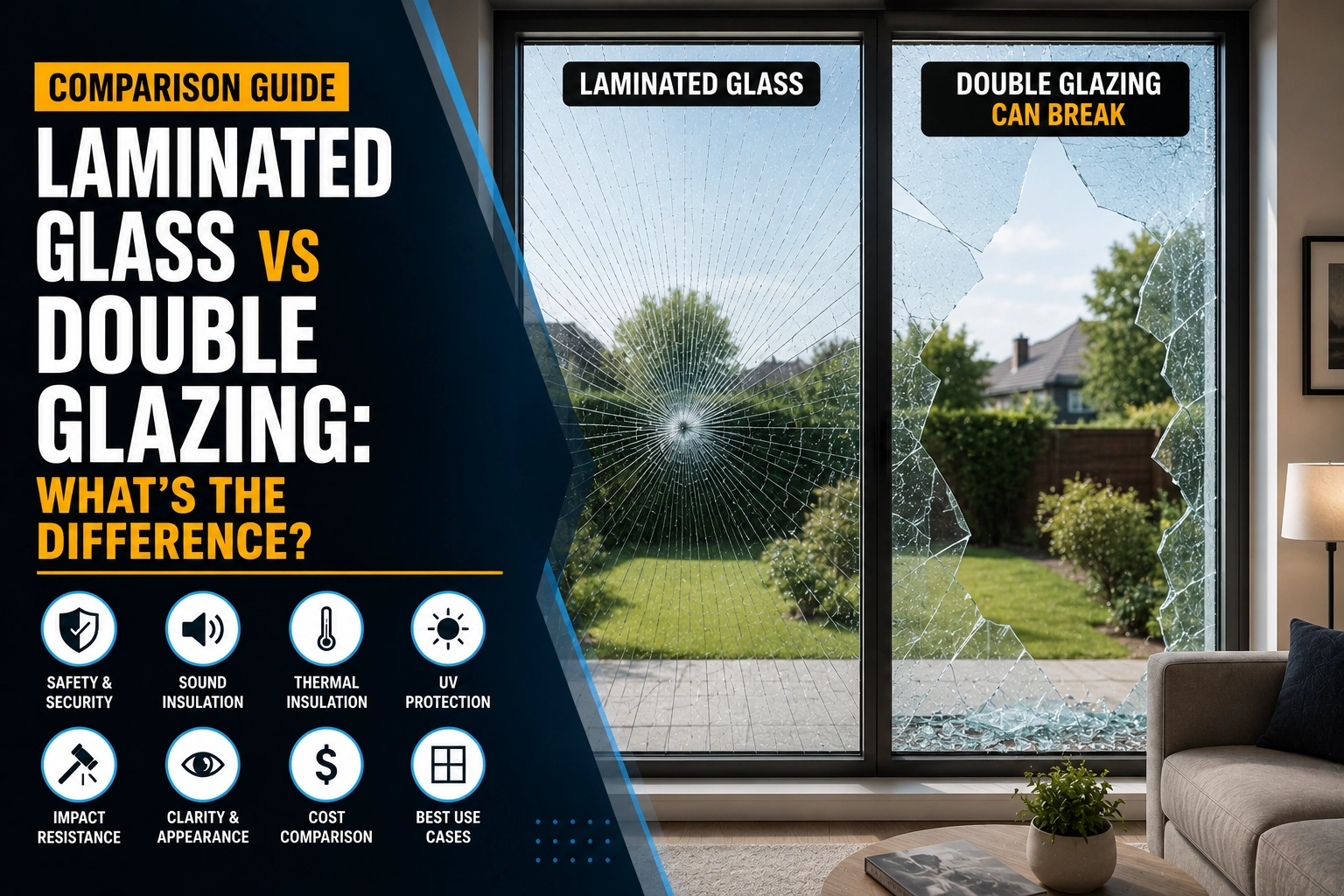
In this guide, we’ll compare their construction, performance, costs, maintenance requirements, and best use cases to help you determine which option offers the right balance of comfort, protection, and long-term value for your home.
If you’re still deciding whether insulated glazing is the right choice for your property, our guide on uPVC double glazing explains how modern double-glazed systems improve energy efficiency, noise reduction, and long-term comfort.
Laminated Glass vs Double Glazing: Key Differences
The table below summarizes the key differences:
| Feature | Laminated Glass | Double Glazing |
|---|---|---|
| Glass layers | 2 glass panes + interlayer | 2 glass panes + air/gas gap |
| Typical thickness | 6.38–13.52 mm | 18–28+ mm total unit |
| Thermal insulation | Low–Moderate | High |
| U-value | ~5.5 W/m²K | ~2.0–3.0 W/m²K* |
| Acoustic performance | ~32–40 dB* | ~30–38 dB* |
| UV reduction | Up to ~99% | Depends on glass type |
| Safety | High | Depends on glass specification |
| Security | High | Moderate–High |
| Condensation control | Limited | High |
| Energy efficiency | Moderate | High |
| Weight | Lower | Higher |
| Best suited for | Safety, security & UV | Thermal efficiency & comfort |
Note: Standard double glazing isn’t automatically “safety glass.” If the panes aren’t tempered or laminated, they can still break into sharp shards on impact — so don’t assume double glazing covers your safety needs on its own.
Laminated Glass vs Double Glazing for Noise Reduction
Both laminated glass and double glazing can reduce outside noise, but they work in different ways. Laminated glass uses a PVB interlayer between two glass panes to help dampen sound vibrations, while double glazing uses two panes separated by an air or argon-filled gap to create an additional acoustic barrier.
| Acoustic Factor | Laminated Glass | Double Glazing |
|---|---|---|
| Glass construction | 2 panes + PVB interlayer | 2 panes + sealed air/argon gap |
| Typical acoustic performance | Around 32–40 dB Rw, depending on specification | Around 30–40+ dB Rw, depending on configuration |
| Traffic noise | Very effective with acoustic laminate | Effective with the right glass and gap |
| Low-frequency noise | Strong performance | Can be less effective with standard configurations |
| Glass thickness | Commonly 6.38–10.38 mm laminated options | Often uses 4–6 mm panes, but varies |
| Main acoustic factor | PVB type and glass thickness | Pane thickness, gap width and glass configuration |
Which Is Better for Noise Reduction?
For general household noise, both can work well when correctly specified. Laminated glass can be particularly useful for traffic and other low-frequency noise, while double glazing benefits from the separation between its two panes.
For higher acoustic performance, a laminated pane within a double-glazed unit can combine both approaches. The final result depends on the glass thickness, interlayer, air gap, frame and overall window system rather than simply choosing laminated or double glazing.
Laminated Glass vs Double Glazing: Cost and Energy Savings
The cost and energy performance of a window depend on more than the type of glass. Glass thickness, Low-E coatings, argon gas, spacer width, frame material and installation can all affect the final result.
For a useful comparison, consider the following typical Australian configurations:
| Glass Configuration | Indicative Cost* | Energy Performance | Potential Energy Benefit |
|---|---|---|---|
| Single clear glass | $38–$100/m² | Low | Baseline |
| Laminated glass | Up to ~$403/m² | Low–Moderate | Limited thermal improvement |
| Low-E glass | Around $288/m² | Moderate–High | Helps reduce heat transfer |
| Standard double glazing | $300–$1,500/m² installed | High | Up to 30% less heat loss through windows |
| Double glazing + Low-E + argon | Higher than standard double glazing | Very High | Greater thermal performance |
| Laminated + Low-E double glazing | Premium | Very High | Combines thermal, acoustic and safety benefits |
*Indicative Australian prices vary significantly depending on glass specification, frame, window size, installation and supplier. Glass-only and complete installed-window prices should not be compared directly. Current Australian cost guides put double-glazed windows at roughly $300–$1,500/m², while laminated glass can cost up to around $403/m² for the glass itself.
How Much Energy Can You Save?
The biggest energy improvement generally comes from moving from single glazing to an insulated double-glazed unit. Australian Government guidance states that double glazing can reduce heat loss through windows by up to 30%.
Laminated glass alone should not be assigned a fixed energy-saving percentage because its primary benefits are safety, security and acoustic performance. Adding Low-E glass and an argon-filled gap to a double-glazed unit can further improve thermal performance.
For example:
- Single glazing: baseline heat transfer
- Laminated glass: mainly improves safety, security and acoustic performance
- Low-E glazing: reduces radiant heat transfer
- Standard double glazing: can reduce window heat loss by up to 30%
- Double glazing + Low-E + argon: provides a higher-performance thermal solution
- Laminated + Low-E double glazing: combines improved thermal performance with acoustic and safety benefits
The actual energy saving for a home depends on window area, orientation, climate, frame type, existing glazing, shading, heating and cooling usage and the final window U-value and SHGC. Therefore, a whole-house percentage should not be guaranteed from glass type alone.
The Main Difference Between Laminated Glass vs Double Glazing

The main difference between Laminated Glass vs Double Glazing is their construction and purpose.
Laminated Glass
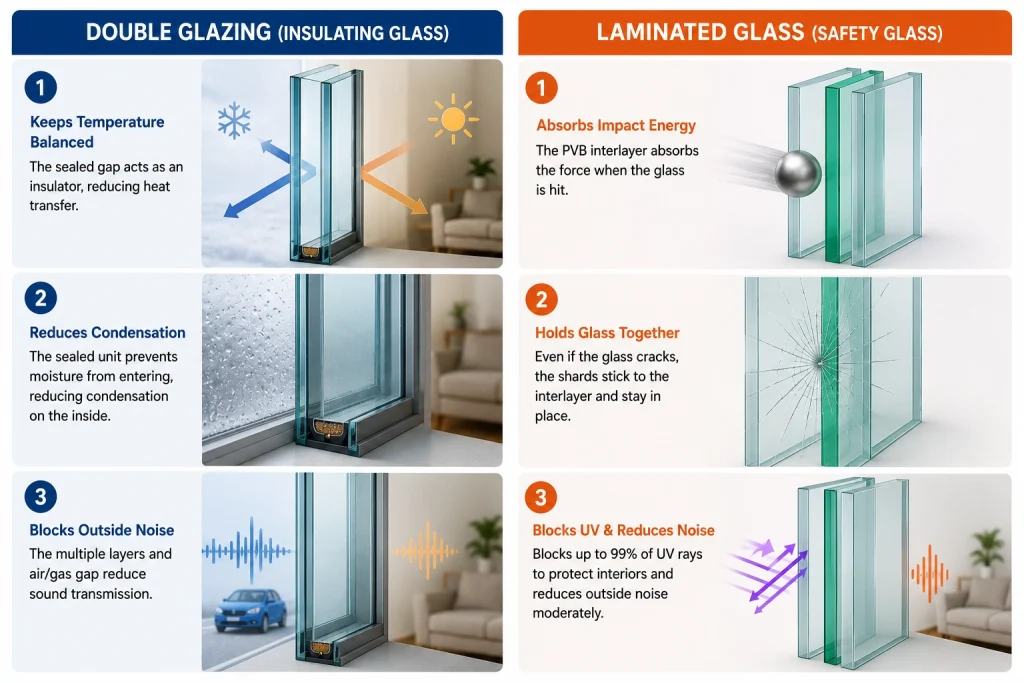
Laminated glass consists of multiple layers of glass with a PVB interlayer, which holds shards together if broken. This makes it ideal for safety, security, and UV protection, while also providing moderate insulation and noise reduction.
Double Glazing
Double glazing focuses on thermal and acoustic performance. It uses two panes separated by a sealed air or gas gap, improving energy efficiency, reducing heat transfer, and minimizing condensation. It also offers superior noise reduction compared to laminated glass, making it ideal for temperature control and quiet indoor environments.
Which One Is Better?
Each type serves different priorities:
- Laminated glass is best for safety and UV protection.
- Double glazing excels in insulation, noise control, and energy efficiency.
For maximum benefits, laminated double-glazed units combine safety with thermal and acoustic performance.
Understanding Laminated Glass
What Laminated Glass Is
Laminated glass is a safety-oriented glass that consists of two or more layers of glass bonded with a plastic interlayer, usually Polyvinyl Butyral (PVB). The interlayer keeps the glass intact if it breaks, preventing dangerous shards from causing injury.
How Laminated Glass Works
The strength of laminated glass comes from the PVB layer, which absorbs energy during impact. When the glass is struck or broken, cracks appear, but the shards adhere to the interlayer, maintaining a barrier and enhancing safety. Laminated glass also provides UV protection, blocking up to 99% of harmful rays, which helps preserve flooring and furniture. In addition, laminated glass offers moderate noise reduction, making it suitable for homes near busy streets.
Applications for Laminated Glass
Laminated glass is best suited for areas where safety is a top priority. Ground-floor windows, doors, skylights, and glass panels in high-traffic areas benefit from its impact resistance. Homeowners also choose laminated glass to reduce the risk of injury from accidental breakage and to provide added security against forced entry.
Understanding Double Glazing
What Double Glazing Is
Double glazing involves two panes of glass separated by a sealed gap filled with air or inert gas such as argon. This design creates a thermal barrier, improving insulation and energy efficiency while reducing noise and condensation.
How Double Glazing Works
The air or gas-filled gap between the two panes slows heat transfer, helping homes remain warm in winter and cool in summer. The sealed design prevents moisture from entering, reducing condensation on the interior surface. Double glazing also significantly improves acoustic insulation, making it ideal for homes near busy roads or noisy neighborhoods.
Applications for Double Glazing
Double glazing is widely used for all residential windows and doors where energy efficiency, temperature control, and noise reduction are priorities. Bedrooms, living areas, kitchens, and bathrooms benefit from the thermal performance and condensation prevention that double glazing offers.
Cost Comparison
The upfront cost of Laminated Glass vs Double Glazing varies depending on several factors, including window size, glass thickness, type and number of interlayers in laminated glass, and the gas used in double glazing. Understanding these differences can help homeowners make an informed choice.
For homeowners in South Australia, installation prices can vary depending on frame material, glass thickness, and window size. You can find a more detailed pricing breakdown in our guide to double glazed windows Adelaide cost.
Laminated Glass Costs
Laminated glass generally has a moderate initial cost, making it ideal for homeowners prioritizing safety without a major budget increase. Some factors that affect the cost include:
- Glass thickness and number of layers: Thicker layers or multiple PVB interlayers improve impact resistance and noise reduction but increase the price.
- Window size and complexity: Larger windows or irregular shapes require more material and labor.
- Installation requirements: Standard frames are more affordable, whereas custom frames or reinforced installation raise the cost.
For example, a medium-sized laminated glass window for a living room may cost 10–20% more than a standard single-pane window, depending on the installation complexity.
Double Glazing Costs
Double glazing usually carries a higher upfront cost due to its construction: two glass panes separated by a sealed air or gas gap, often filled with argon or krypton. Key cost factors include:
- Sealed gas gap: The gas improves insulation but adds to material and manufacturing costs.
- Frame type: High-quality frames increase durability but raise the price.
- Installation complexity: Proper sealing is essential to prevent condensation and maintain insulation performance.
On average, double-glazed units can cost 25–50% more than laminated glass, depending on size and frame specifications.
Long-Term Savings
Although double glazing is more expensive initially, it can provide substantial energy savings over time:
- Reduced heating and cooling bills: Thermal insulation minimizes heat loss in winter and heat gain in summer.
- Long-term durability: High-quality double-glazed units often last 20 years or more with proper maintenance.
- Potential hybrid solutions: Laminated double-glazed units combine safety, insulation, and noise reduction, although they have the highest upfront cost.
Practical Takeaways
- Safety vs Energy Efficiency: Laminated glass is more cost-effective for impact resistance and security, while double glazing is better for reducing energy costs.
- Budget Planning: Homeowners should weigh upfront costs against long-term savings to choose the right solution.
- Hybrid Options: Laminated double-glazed units offer maximum benefits but at a higher price point.
By combining these considerations, homeowners can choose a solution that balances budget, safety, and energy efficiency while maximizing long-term value.
Best Use Cases
Laminated Glass
For homeowners prioritizing safety, laminated glass is most effective in ground-floor windows, doors, skylights, or high-traffic areas. Its ability to stay intact when broken makes it ideal for preventing injury and deterring forced entry. Laminated glass also helps reduce fading from sunlight thanks to its UV-blocking properties.
Double Glazing
Double glazing is best suited for homeowners focused on energy efficiency, noise reduction, and condensation control. It is recommended for all windows and doors in living rooms, bedrooms, kitchens, and bathrooms. Double glazing also contributes to long-term savings by reducing energy consumption.
Combining Laminated Glass and Double Glazing
Some homeowners choose a hybrid solution that combines laminated glass with double glazing. This provides maximum safety, energy efficiency, and noise reduction in a single unit. For example, a laminated double-glazed unit ensures that even if a pane is broken, the PVB interlayer holds it together while the sealed gap maintains thermal performance and sound insulation.
Maintenance and Cleaning
How to Maintain Laminated Glass
Laminated glass is durable and relatively low-maintenance, but it requires careful cleaning to preserve both safety and clarity. Homeowners should avoid abrasive cleaners or rough scrubbing tools, as these can scratch the PVB interlayer. Using a soft microfiber cloth with mild soapy water or a standard glass cleaner is recommended. It is also important to wipe spills or dirt immediately to prevent long-term stains. Regularly inspecting the glass for chips or cracks, particularly in high-traffic or high-impact areas, helps ensure continued safety. Ammonia-based cleaners should be avoided directly on the PVB layer to prevent degradation. With consistent care, laminated glass can maintain its aesthetic appeal and safety properties for many years.
How to Maintain Double Glazing
Double-glazed units require gentle cleaning to protect the seals that maintain thermal insulation. Cleaning should be done with mild soap and water while avoiding moisture seeping into the sealed gap between the panes. Homeowners should periodically inspect the units for condensation inside the panes, which can indicate seal failure, and ensure that frames and hinges are properly maintained to prevent operational issues. Proper care of double-glazed windows preserves their energy efficiency, prolongs their lifespan, and reduces the likelihood of costly repairs.
Energy Savings and Environmental Impact
Energy Efficiency Benefits
Double glazing offers significant energy savings by reducing heat transfer through the window. This keeps homes warmer in winter and cooler in summer, which directly lowers heating and cooling costs. Laminated glass provides moderate insulation and excels at blocking UV rays, helping to reduce heat buildup from sunlight and protect interior furnishings. Homes that combine laminated glass with double glazing achieve both enhanced energy efficiency and improved safety, benefiting from the strengths of both systems.
Environmental Impact
Using energy-efficient glass also contributes to environmental sustainability. By reducing the energy needed for heating and cooling, homeowners decrease the carbon footprint of their homes. High-quality glass has a long lifespan, which reduces waste and the need for frequent replacements. Laminated glass further extends the life of interior furniture and flooring by protecting them from harmful UV rays. Selecting the right type of glass allows homeowners to improve comfort, lower energy consumption, and support environmentally responsible living.
Conclusion
Deciding between Laminated Glass vs Double Glazing ultimately depends on your home’s priorities. Laminated glass is ideal for areas where safety, security, and UV protection are important, such as ground-floor windows, doors, and skylights. It provides peace of mind while also offering moderate insulation and sound reduction.
Double glazing, on the other hand, is best for improving energy efficiency, minimizing condensation, and reducing external noise. For homeowners seeking the benefits of both safety and insulation, laminated double-glazed units offer a hybrid solution that delivers security, thermal performance, and soundproofing in one package. By understanding your needs and evaluating costs, long-term savings, and practical applications, you can choose the glass solution that best enhances comfort, safety, and efficiency in your Melbourne home.
Which type of glass is safer for my home?
Answer: Laminated glass is generally safer because the PVB interlayer holds the glass together if it cracks. This prevents shards from falling, reducing the risk of injury and improving security, especially for ground-floor windows and doors.
Which glass type is better for energy efficiency?
Answer: Double glazing provides superior thermal insulation due to its two panes and gas-filled gap. It helps maintain indoor temperatures, reducing heating and cooling costs and improving energy efficiency over time.
Can laminated glass reduce noise?
Answer: Laminated glass provides moderate noise reduction thanks to the PVB layer, which dampens vibrations. However, double glazing is more effective for soundproofing because the sealed gap between panes creates an additional acoustic barrier.
Can I retrofit existing windows with either option?
Answer: Yes. Both laminated glass and double-glazed units can replace single-pane windows. For maximum benefit, homeowners can install laminated double-glazed units, which combine impact resistance, thermal insulation, and noise reduction.