
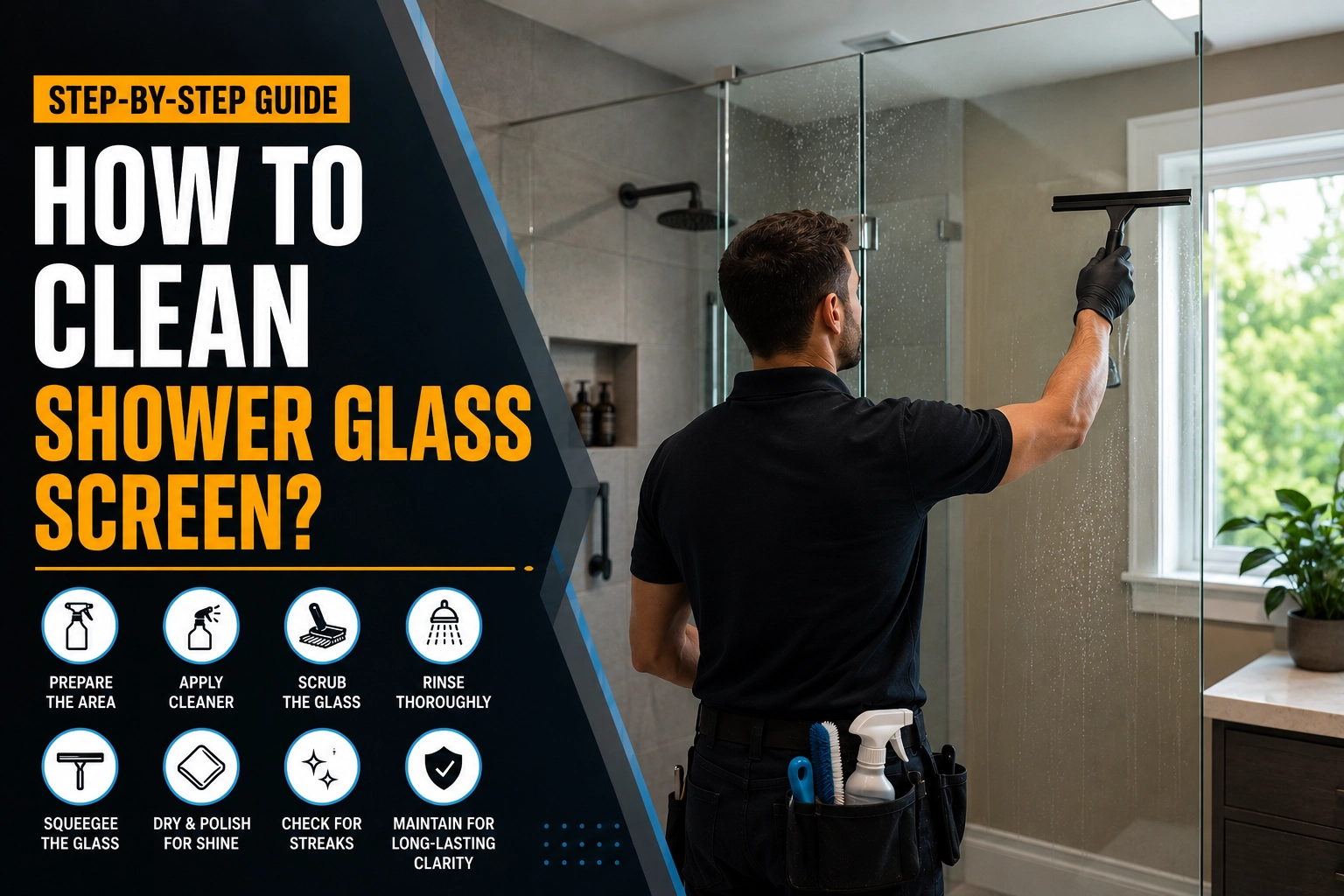
This guide explains how to clean a shower glass screen with simple home methods and practical cleaning options without need to glass replacement services. You will learn what to prepare before cleaning, how to use vinegar, how to remove tougher stains with baking soda, when to use commercial cleaners, how to deal with limescale, and how to stop shower glass from getting dirty again. The goal is to help you clean the glass safely without scratching it or wasting time on methods that do not work.
| Cleaning need | Best method | Suitable for |
|---|---|---|
| Light soap scum and cloudy marks | Vinegar solution | Weekly cleaning |
| Tough stains and built-up grime | Baking soda paste | Older marks and stubborn spots |
| Heavy limescale or neglected glass | Commercial cleaner | Deep cleaning and hard water stains |

Preparing to Clean Shower Glass (Essential First Step)
Before starting the cleaning process, it is important to prepare the right tools and create a safe environment. Shower glass may look durable, but using harsh chemicals, abrasive scrubbers, or incorrect techniques can cause scratches, cloudy patches, or damage to seals.
Proper preparation not only protects the glass but also makes the cleaning process faster and more effective.
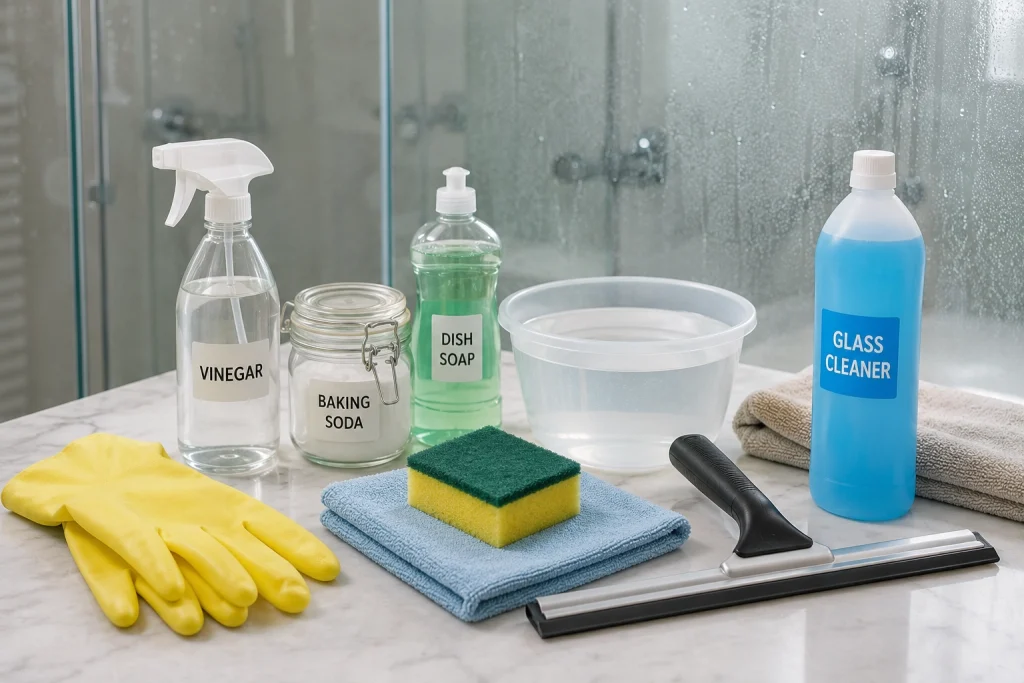
Recommended Cleaning Tools
For most shower glass cleaning tasks, you will need the following items:
- White vinegar
- Baking soda
- Warm water
- Spray bottle
- Soft sponge
- Microfibre cloth
- Rubber gloves
- Squeegee
For heavy hard water stains or limescale, you may also need a commercial glass cleaner or descaling product.
Safety and Ventilation Guidelines
Always ensure the bathroom is well ventilated before cleaning:
- Open a window
- Turn on the exhaust fan
- Avoid mixing different cleaning chemicals
Important: Never mix vinegar with bleach or ammonia-based cleaners, as this can produce toxic fumes.
Pre-Cleaning Step (Highly Recommended)
Before applying any cleaning solution:
- Rinse the glass with warm water
- Remove loose dirt and dust
- Prepare the surface for better cleaning performance
This simple step helps vinegar, baking soda, or commercial cleaners work more effectively on stains.
Why Preparation Matters
Good preparation ensures:
- Better cleaning results
- Less effort during scrubbing
- Protection against scratches and damage
- Longer-lasting shine on glass surfaces
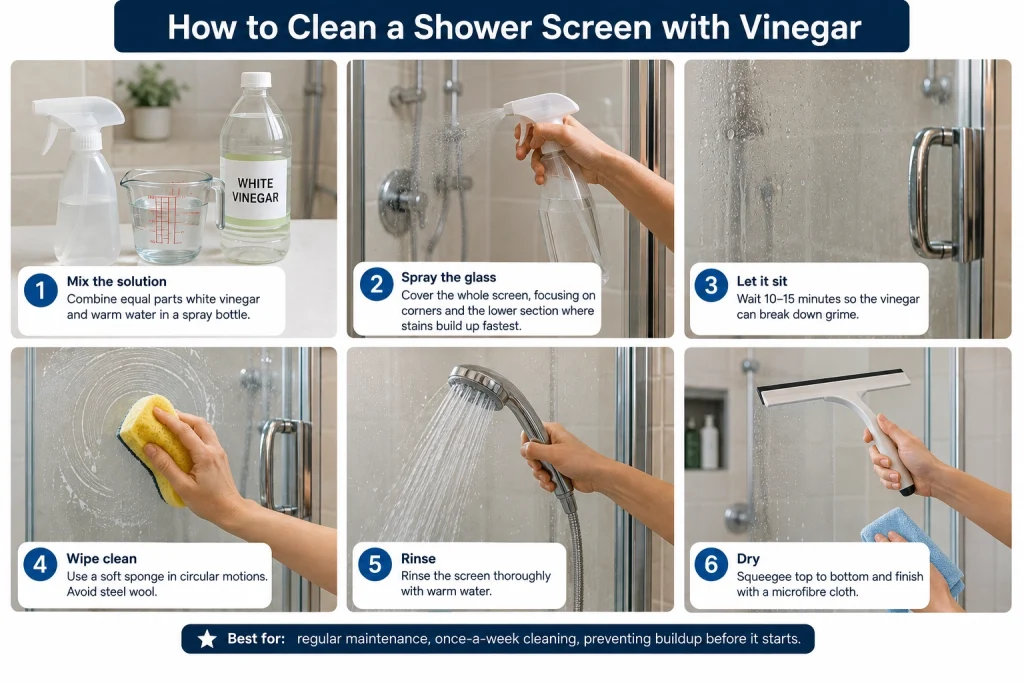
Method 1: Clean a Shower Glass Screen with Vinegar
Vinegar is one of the simplest and most affordable ways to clean a shower glass screen. It helps remove soap scum, water spots, and light mineral buildup without using harsh chemicals. For many Melbourne homeowners, this method works well as part of a regular weekly cleaning routine to keep shower screens clear and shiny.
What You Need
- White vinegar
- Warm water
- Spray bottle
- Soft sponge or cloth
- Microfibre cloth
- Squeegee (optional)
Step-by-Step Instructions
1. Mix the Cleaning Solution
Combine equal parts white vinegar and warm water in a spray bottle. Shake gently to mix.
2. Spray the Glass
Spray the solution generously across the shower glass, focusing on cloudy areas, corners, and the lower sections where water stains usually appear.
3. Let It Sit
Leave the solution on the glass for 10–15 minutes. This gives the vinegar time to break down soap scum and loosen grime.
4. Wipe the Surface
Use a soft sponge or cloth to clean the glass in circular motions. Avoid steel wool or rough scrubbers, as they may scratch the glass surface.
5. Rinse and Dry
Rinse the glass thoroughly with warm water, then dry it with a clean microfibre cloth. For a streak-free finish, use a squeegee from top to bottom.
Why This Method Works
This method is ideal if you are looking for a natural and low-cost way to clean a shower glass screen. It is safe for regular maintenance and helps prevent buildup before it becomes difficult to remove.
However, if the glass has heavy limescale or stubborn hard water stains, you may need to repeat the process or combine it with a stronger cleaning method.
| Step | What to Do | Why It Matters |
|---|---|---|
| 1 | Mix vinegar and warm water | Helps loosen soap scum |
| 2 | Spray the glass completely | Covers cloudy and stained areas |
| 3 | Wait 10–15 minutes | Gives vinegar time to break down grime |
| 4 | Wipe with a soft sponge | Removes loosened buildup safely |
| 5 | Rinse and dry | Prevents streaks and new water spots |
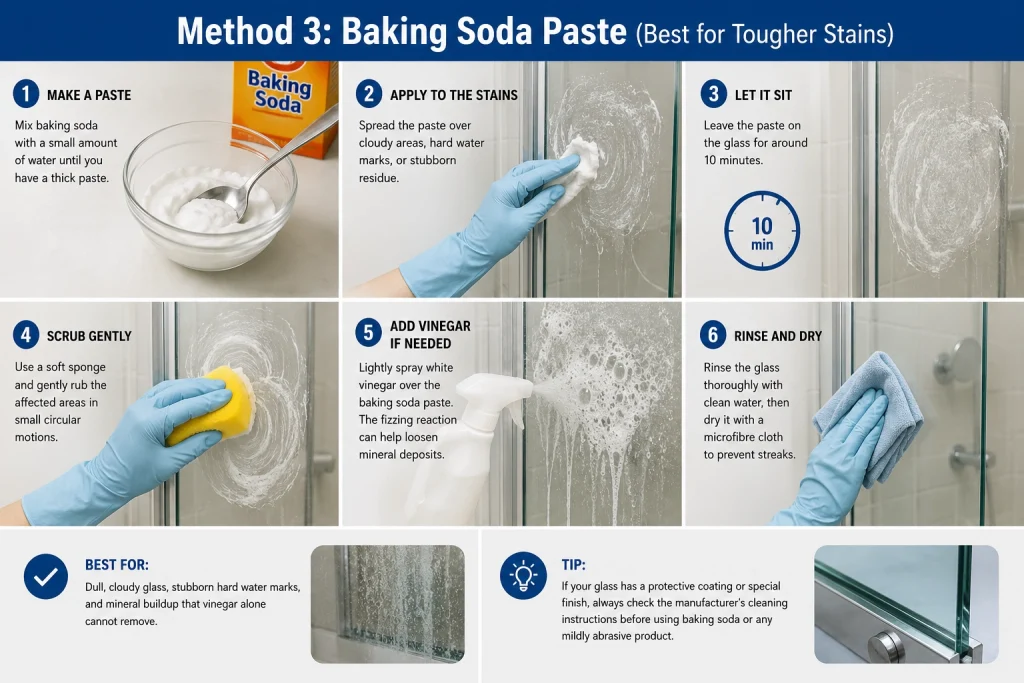
Method 2: Use Baking Soda for Tough Stains
If vinegar alone does not remove the marks, baking soda can be an effective next step. Because it is mildly abrasive, baking soda helps lift stubborn stains and soap scum without being overly harsh on the glass when used correctly. This method works especially well for older residue, dull patches, and buildup near the bottom of the shower screen.
What You Need
- Baking soda
- Water
- Soft sponge or cloth
- Spray bottle with vinegar (optional)
- Warm water for rinsing
Step-by-Step Instructions
1. Make a Baking Soda Paste
Mix baking soda with a small amount of water until it forms a thick paste. It should stick to the glass easily without dripping.
2. Apply to Stained Areas
Spread the paste over cloudy spots, soap scum, and hard water marks using a soft sponge or cloth.
3. Let It Sit
Allow the paste to remain on the glass for about 10 minutes. This helps soften stubborn residue before scrubbing.
4. Gently Scrub the Glass
Using small circular motions, gently scrub the stained areas with a soft sponge or cloth. Avoid applying too much pressure.
5. Add Vinegar for Extra Cleaning Power (Optional)
For tougher buildup, lightly spray vinegar over the baking soda paste. The fizzing reaction helps loosen mineral deposits and grime.
6. Rinse and Dry
Rinse the glass thoroughly with warm water to remove all residue. Dry the surface with a clean microfibre cloth to prevent streaks or white marks.
Why This Method Works
This method is useful for homeowners searching for how to clean glass shower doors with hard water stains that are more stubborn than everyday soap scum. It provides stronger cleaning power while still using simple household ingredients instead of harsh commercial chemicals.
Important Tips
If your shower screen has a protective coating, check the manufacturer’s cleaning instructions before using any abrasive cleaner.
Do not scrub too aggressively, as excessive pressure may damage certain glass coatings.
Avoid rough scouring pads or steel wool.
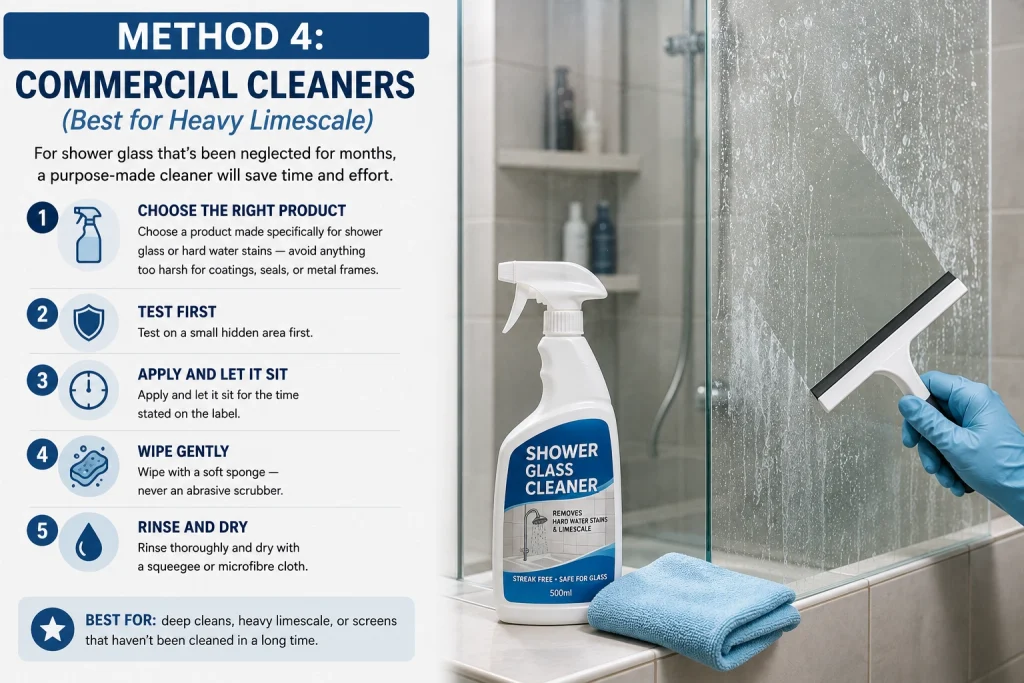
Method 3: Use Commercial Cleaners for Shower Glass
Commercial cleaners can be a good solution when vinegar and baking soda are no longer effective. If your shower glass has heavy limescale, thick soap scum, or long-term hard water stains, a specialised shower glass cleaner or limescale remover can make the cleaning process faster and easier. This is especially useful in areas where mineral buildup occurs frequently.
Choosing the Right Cleaner
When selecting a commercial cleaner, choose a product specifically designed for:
- Shower glass
- Bathroom glass
- Hard water stain removal
Avoid products that may be too harsh for:
- Glass coatings
- Silicone seals
- Metal frames
- Bathroom tiles
Before using any cleaner, always read the product instructions carefully and test it on a small hidden section first.
Step-by-Step Instructions
1. Apply the Cleaner
Spray or apply the cleaner directly onto the shower glass, focusing on stained or cloudy areas.
2. Let the Product Sit
Allow the cleaner to sit for a few minutes, following the time recommended on the product label. This helps break down soap scum, mineral deposits, and stubborn stains.
3. Wipe the Glass
Use a soft sponge or cloth to wipe the surface gently. Avoid abrasive scrubbers that may scratch the glass.
4. Rinse Thoroughly
Rinse the shower screen completely with warm water to remove any leftover cleaning product.
5. Dry the Surface
Dry the glass with a clean microfibre cloth or a squeegee. This helps prevent new water spots and streaks from forming.
Why This Method Works
Commercial cleaners are often the best option for homeowners searching for how to get shower doors clean after long periods without maintenance. They provide stronger cleaning power than natural methods and can remove stubborn buildup more effectively.
Important Tips
Drying the glass after cleaning is important to stop stains from returning quickly.
Do not leave strong cleaners on the glass longer than recommended.
Some products may damage silicone, metal frames, or protective coatings if overused.
For regular weekly cleaning, natural methods like vinegar may still be enough.
How to Remove Limescale from Shower Glass
Limescale appears as white, cloudy, or chalky marks on shower glass. It forms when minerals in water are left behind after the surface dries. In many homes, especially in areas with hard water, limescale can build up quickly if the shower screen is not cleaned or dried regularly.
Step-by-Step Guide to Removing Limescale
1. Spray Vinegar on the Glass
Start by spraying a generous amount of white vinegar onto the affected areas. Focus on cloudy patches and visible mineral buildup.
2. Let the Vinegar Soak
Leave the vinegar on the glass for 15–20 minutes. This gives the acid enough time to break down mineral deposits.
For thicker limescale buildup, soak a paper towel in vinegar and press it directly onto the stain. This keeps the vinegar in contact with the surface longer and improves the cleaning result.
3. Wipe with a Soft Sponge
After soaking, wipe the area gently using a soft sponge or cloth. Many light and moderate stains should come away at this stage.
4. Use Baking Soda for Stubborn Marks
If some limescale remains, apply a baking soda paste to the area and gently scrub in small circular motions. Avoid using excessive pressure.
5. Try a Commercial Limescale Remover if Needed
For very stubborn mineral deposits, use a commercial limescale remover that is safe for shower glass. Always follow the product instructions carefully and rinse the surface thoroughly afterward.
Important Tips for Safe Cleaning
- Avoid steel wool or rough scrubbing pads, as they may scratch the glass.
- Do not scrub aggressively, even if the stains are stubborn.
- Heavy limescale often requires multiple cleaning sessions rather than one strong treatment.
- Gentle repeated cleaning is usually safer and more effective than harsh scrubbing.
Why Limescale Keeps Returning
If you are researching how to clean a shower glass screen because of hard water stains, limescale is likely the main cause. Removing existing buildup is important, but preventing future stains is equally essential.
Drying the shower glass after each use with a squeegee or microfibre cloth can significantly reduce future limescale buildup and help keep the glass clear for longer.
How to Clean Bathroom Glass Doors Without Leaving Streaks
One of the most common problems after cleaning shower glass is streaking. Even when the glass is technically clean, leftover water, cleaning residue, or cloth fibres can make the surface look cloudy or messy. To achieve a clear, polished finish, the drying process is just as important as the cleaning itself.
Step-by-Step for a Streak-Free Finish
1. Rinse the Glass Thoroughly
After cleaning the shower screen, rinse away all cleaning solution and loosened residue with warm water. Any leftover product can leave marks once the glass dries.
2. Use a Squeegee
Starting at the top of the glass, pull a squeegee downward in straight lines. Wipe the blade after each pass if needed to avoid spreading water back onto the surface.
3. Dry with a Microfibre Cloth
Use a clean, dry microfibre cloth to polish the remaining moisture from:
- Corners
- Edges
- Handles
- Bottom sections of the glass
This helps remove small water spots and gives the glass a clearer finish.
Common Mistakes to Avoid
- Avoid paper towels if they leave lint or fibres behind.
- Do not use excessive amounts of cleaner, as extra product can leave residue on the glass.
- Never skip the drying stage, even if the glass already looks clean.
The Simple Rule for Clear Shower Glass
If you want to know how to clean bathroom glass door surfaces properly, follow this simple routine:
Clean → Rinse → Dry
Skipping the final drying step is one of the main reasons shower glass quickly becomes cloudy again. Regular drying with a squeegee or microfibre cloth can help keep your shower screen cleaner for much longer.
How to Prevent Shower Glass from Getting Dirty Again
Once the glass is clean, prevention is the easiest way to keep it looking good. Shower screens become dirty because water, soap, shampoo, body wash, and minerals dry on the surface. If you reduce how much residue stays on the glass, you reduce future cleaning work.
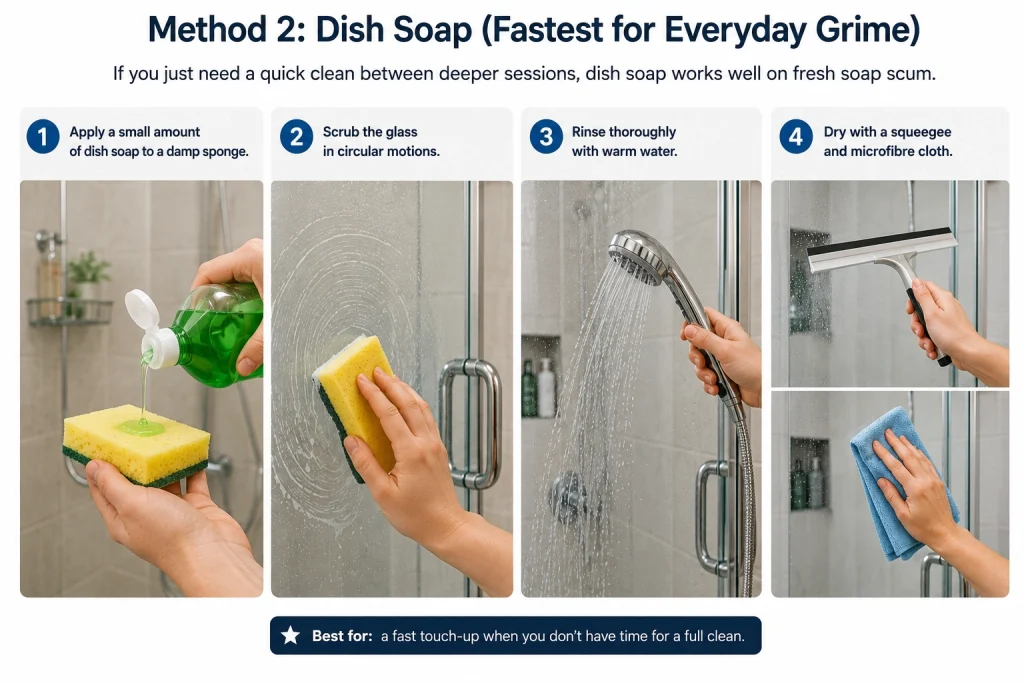
The best habit is to use a squeegee after every shower. It only takes a few seconds, but it removes most of the water before it dries. This simple step can prevent water spots, soap scum, and limescale from building up.
You can also keep a microfibre cloth nearby to wipe the edges and metal frame. Pay attention to the bottom of the glass, because this area often collects the most water and soap residue. Good bathroom ventilation also helps because it reduces moisture and drying time.
For longer-term protection, consider using a glass protection spray or water repellent designed for shower screens. These products help water bead and run off the glass more easily. They do not replace cleaning, but they can make maintenance easier.
Good prevention habits include:
- Use a squeegee after each shower
- Keep the bathroom well ventilated
- Avoid letting soap residue dry on the glass
- Clean lightly once a week
- Deep clean before stains become heavy
Common Mistakes to Avoid When Cleaning Shower Glass
Many homeowners accidentally make shower glass more difficult to clean by using the wrong methods or products. Avoiding a few common mistakes can help keep your shower screen clearer for longer and prevent damage to the glass.
1. Waiting Too Long Between Cleans
One of the biggest mistakes is leaving shower glass uncleaned for long periods. Soap scum, hard water stains, and limescale become much harder to remove when they build up over weeks or months.
Regular light cleaning is usually easier and more effective than occasional deep cleaning.
2. Using Rough Scrubbers
Steel wool, hard brushes, and abrasive scouring pads can scratch the glass surface or damage protective coatings.
Once shower glass becomes scratched:
- Dirt and soap scum stick more easily
- Cloudy marks become harder to remove
- The glass may lose its clear finish permanently
Always use a soft sponge, cloth, or non-abrasive cleaning pad instead.
3. Using the Wrong Cleaning Products
Some cleaning chemicals are too harsh for shower glass, frames, or seals.
Important things to avoid:
- Do not mix cleaning chemicals together.
- Never mix vinegar with bleach.
- Avoid using strong products unless they are suitable for shower glass.
Always read the product label carefully and follow the manufacturer’s instructions.
4. Skipping the Drying Step
Many people clean and rinse the glass but leave it wet afterward. When water dries naturally, minerals can remain on the surface and create new spots or streaks.
To prevent this:
- Use a squeegee after cleaning
- Dry the glass with a microfibre cloth
- Remove excess water from edges and corners
Drying the glass properly helps keep it cleaner for longer.
5. Ignoring Frames, Seals, and Corners
The glass is not the only area that collects grime. Shower frames, rubber seals, tracks, and corners often trap soap residue and moisture.
If these areas are ignored:
- Dirt can spread back onto the glass
- Mould and buildup may develop
- The shower may still look unclean overall
Cleaning the entire shower screen — not just the glass — gives better long-term results.
Weekly Cleaning Routine for Melbourne Homeowners
For most households, a weekly routine is enough to keep shower glass clean. You do not need to deep clean every time. A quick vinegar spray, rinse, and dry can prevent most stains from becoming serious.
Once a week, spray the glass with a vinegar and warm water solution. Let it sit for a few minutes, then wipe with a soft sponge. Rinse with warm water and finish with a squeegee and microfibre cloth. This simple routine keeps the glass clear and reduces the need for stronger products.
Once a month, check for limescale near the bottom of the screen, around handles, and along the edges. If you see build-up, treat it early with vinegar or baking soda. Early cleaning is much easier than removing old stains later.
This routine is ideal for people who want a practical answer to how to clean a shower glass screen without turning bathroom cleaning into a big job every weekend.
Vinegar vs Baking Soda vs Commercial Cleaner
Each method has its place. Vinegar is best for regular cleaning and light mineral marks. Baking soda is better for tougher stains and old soap scum. Commercial cleaners are useful for heavy limescale and neglected shower screens.
| Method | Best for | Main benefit |
|---|---|---|
| Vinegar | Light soap scum and water spots | Cheap and easy |
| Baking soda | Stubborn grime and mild stains | Gentle scrubbing power |
| Commercial cleaner | Heavy limescale and deep cleaning | Stronger results |
The best approach is not always choosing one method. In many cases, you can start with vinegar, move to baking soda if needed, and use commercial cleaners only for the hardest stains. This keeps cleaning simple while reducing unnecessary chemical use.
How Often Should You Clean a Shower Glass Screen?
For a busy household, shower glass should be lightly cleaned once a week and dried after daily use. If several people use the shower every day, you may need to wipe the glass more often. If the shower is used less frequently, weekly cleaning may be enough.
Deep cleaning can be done monthly or whenever you notice cloudy marks returning. The more often you remove water and soap residue, the less often you will need strong cleaning products.
If your goal is to understand how to clean glass shower doors and keep them clean long-term, frequency matters. Regular light cleaning is always easier than occasional heavy scrubbing.
Final Checklist: How to Clean a Shower Glass Screen
Here is a simple practical checklist you can follow:
- Rinse the glass with warm water
- Spray vinegar solution and wait 10 to 15 minutes
- Wipe with a soft sponge
- Use baking soda paste for stubborn stains
- Use commercial cleaner only when needed
- Rinse thoroughly
- Dry with a squeegee and microfibre cloth
- Repeat weekly to prevent build-up
This process gives you a clear, safe, and realistic method for everyday shower glass care.
Conclusion
Knowing how to clean a shower glass screen makes bathroom maintenance much easier, especially when you choose the right method for the type of stain. Vinegar is usually enough for light soap scum and everyday water spots, while baking soda works better for tougher marks. For heavy limescale or long-neglected glass, a suitable commercial cleaner can save time and give a clearer result.
The most important part is prevention. After cleaning, use a squeegee after showers, keep the bathroom ventilated, and do a quick weekly clean before stains become stubborn. With this routine, how to clean a shower glass screen becomes a simple habit instead of a difficult deep-cleaning job.