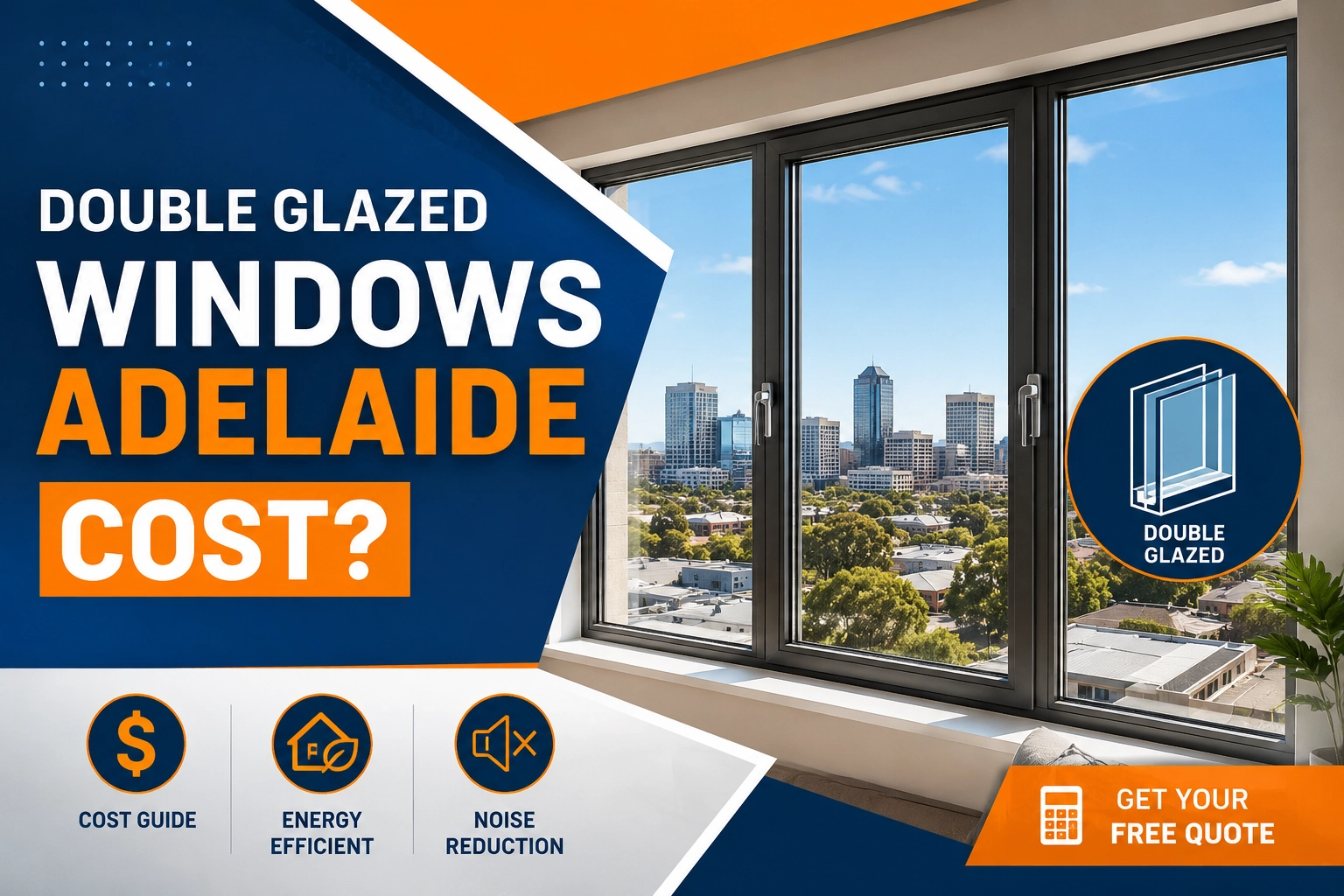
This guide breaks down the main price ranges, cost factors, material options, glass choices, installation considerations, and practical ways to manage your budget when choosing double glazed windows in Adelaide.
How Much Do Double Glazed Windows Cost in Adelaide?
In Adelaide, double glazed windows can vary significantly in price depending on several factors. As a general guide, double glazed window glass replacement may range from around $800–$1,500 per square metre
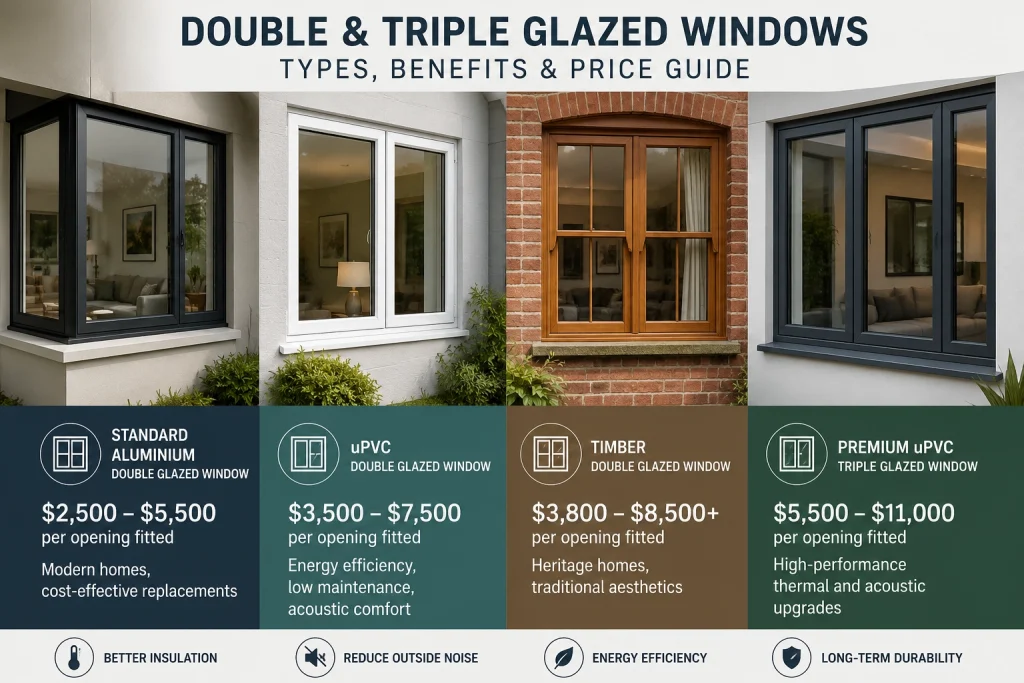
The table below provides an estimated breakdown of the typical costs involved in supplying and installing double glazed windows.
This includes the approximate cost of these parameters:
- window itself cost
- associated installation expenses such as delivery, transportation, removal of existing windows, installation labour, sealing, and basic finishing work
| Double Glazed Window Type | Window Supply | Installation & Associated Costs* | Typical Total Installed Price |
|---|---|---|---|
| Standard Aluminium | $1,800–$4,000 | $700–$1,500 | $2,500–$5,500 |
| uPVC | $2,500–$6,000 | $1,000–$1,500 | $3,500–$7,500 |
| Timber | $2,800–$7,000 | $1,000–$1,500+ | $3,800–$8,500+ |
| Premium uPVC Triple Glazed | $4,000–$9,000 | $1,500–$2,000 | $5,500–$11,000 |
| Retrofit Double Glazing | $1,200–$3,000 | $600–$1,000 | $1,800–$4,000 |
* Installation & Associated Costs typically include delivery and transportation, removal of existing windows, professional installation labour, sealing, weatherproofing, and basic finishing work. Additional costs may apply for scaffolding, difficult site access, structural modifications, custom sizes, heritage requirements, or premium finishing.
These ranges are influenced by the frame, glass, opening size, window style, site access, internal finishing, and whether any structural or compliance work is required. Clearfox notes that double glazing can add roughly 30–60% to the fitted per-opening price, depending on the project.
Double Glazed Window Cost by Component
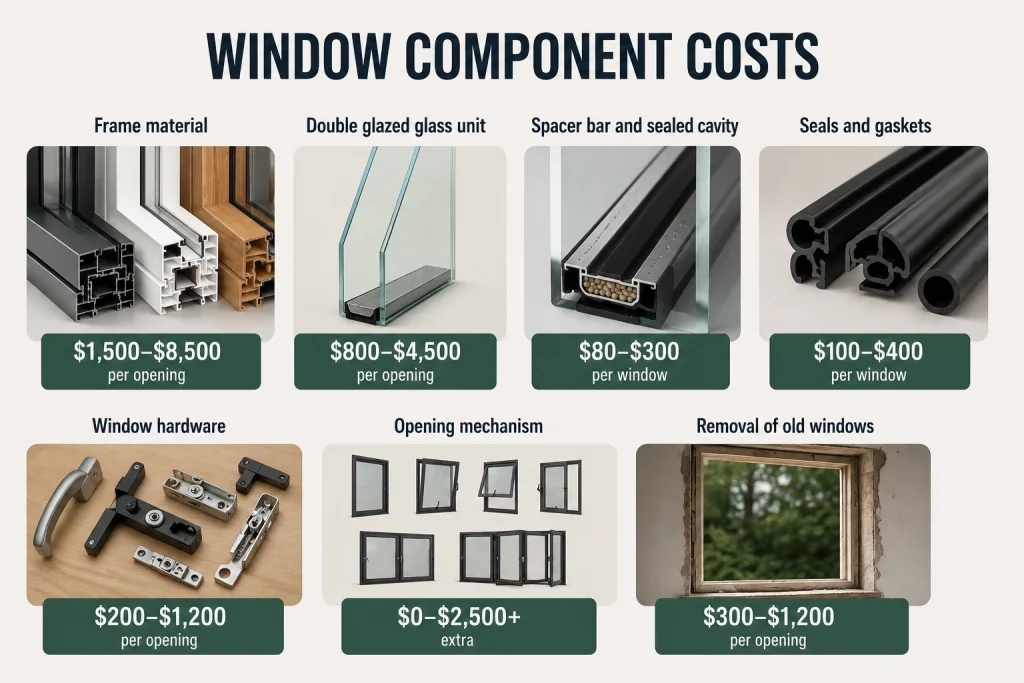
The table below gives an approximate cost guide for the main components included in a fitted double glazed window quote.
| Window Component | Approximate Cost | What It Usually Covers |
|---|---|---|
| Frame material | $1,500–$8,500 per opening | Aluminium, uPVC, timber, or thermally broken aluminium frame. Aluminium is usually more affordable, while timber and premium uPVC generally cost more. |
| Double glazed glass unit | $800–$4,500 per opening | Two panes of glass with a sealed air or gas-filled gap. The price increases with larger sizes, Low-E coating, laminated glass, acoustic glass, or argon filling. |
| Spacer bar and sealed cavity | $80–$300 per window | The spacer separates the two panes of glass and helps maintain the insulating gap. Warm-edge spacers usually cost more than standard spacers. |
| Seals and gaskets | $100–$400 per window | Quality seals reduce draughts, moisture issues, and air leakage. Better sealing improves thermal and acoustic performance. |
| Window hardware | $200–$1,200 per opening | Handles, hinges, locks, winders, rollers, restrictors, and security hardware. More complex opening systems require stronger and more expensive hardware. |
| Opening mechanism | $0–$2,500+ extra | Fixed windows are usually the cheapest. Sliding, awning, casement, tilt-and-turn, stacker, and bifold systems usually add more to the price. |
| Removal of old windows | $300–$1,200 per opening | Careful removal of existing frames, old glass, sealant, and preparation of the opening before the new window is installed. |
What’s Included in the Cost of Double Glazed Windows?
A proper double glazing quote should include more than just the glass. The final price usually reflects the complete window system, the installation process, and the finishing work required to make the new window perform properly.
Frame Material
The frame is one of the biggest price factors. Aluminium, uPVC, timber, thermally broken aluminium, and composite systems all sit at different price levels. Aluminium is often chosen for its durability and slim modern appearance, while uPVC is popular for energy efficiency and low maintenance. Timber is usually more expensive but remains highly desirable for heritage or character homes.
Glass Specification
The glass type can change both the performance and cost of the window. Standard double glazing is the base option, but you may also choose Low-E glass, argon-filled units, laminated glass, acoustic glass, toughened safety glass, or solar control glass. Each upgrade can increase the cost, but it may also improve comfort, noise reduction, security, or energy efficiency.
Window Hardware
Locks, hinges, handles, winders, restrictors, security hardware, and seals are all part of the system. Higher-quality hardware can improve durability, security, ease of use, and long-term performance.
Removal of Existing Windows
In replacement projects, the existing windows usually need to be removed carefully. This may include taking out old frames, removing damaged sealants, preparing the opening, and disposing of old materials.
Installation and Finishing
Installation costs can include fitting the new frame, sealing, waterproofing, internal trims, external finishing, patching, rendering, architraves, and making the new window look properly integrated with the home.
Access and Site Conditions
A ground-floor window with easy access will generally cost less to install than a second-storey window, a window above sloping ground, or a large glazing unit that requires specialist lifting equipment. Scaffolding, narrow access, landscaping, or difficult site conditions can all increase labour costs.
Compliance, BAL and Energy Requirements
Some homes may require additional compliance considerations, such as BAL-rated systems in bushfire-prone areas, heritage approvals, safety glass requirements, or energy-rating documentation. These requirements can affect both product selection and total cost.
Double Glazed Window Cost by Frame Material
Frame material has a major impact on the final cost of double glazed windows. It affects not only the price, but also insulation, durability, maintenance, appearance, and long-term performance.
| Frame Material | Approximate Cost | Main Benefits | Best Suited To |
|---|---|---|---|
| Aluminium | $2,500–$5,500 per opening | Durable, modern, slim profile, low maintenance | Contemporary homes and coastal areas |
| uPVC | $3,500–$7,500 per opening | Strong insulation, low maintenance, good noise reduction | Energy-efficient homes and noise-sensitive areas |
| Timber | $3,800–$8,500+ per opening | Natural appearance, good insulation, heritage appeal | Character homes and traditional properties |
| Thermally Broken Aluminium | $4,500–$9,500+ per opening | Better thermal performance than standard aluminium | High-performance modern homes |
| Composite Frames | $5,000–$10,000+ per opening | Strong performance, design flexibility, premium finish | Custom and architectural projects |
Aluminium is usually a practical choice for homeowners who want a durable and modern window at a more affordable price point. uPVC is often selected for better insulation, airtightness, and acoustic performance. Timber and composite frames usually cost more, but they are ideal for heritage homes, premium renovations, and projects where appearance and long-term performance are key priorities.
These prices are indicative only and can vary depending on window size, glass type, hardware, installation complexity, and site access.
Double Glazed Window Prices by Window Style
The way a window opens also affects the price. Fixed windows are usually the most affordable because they have no opening hardware. More complex styles, such as tilt and turn windows or large sliding doors, generally cost more because they require additional hardware, engineering, and installation care.
Fixed Double Glazed Windows
Fixed double glazed windows do not open, which makes them one of the most cost-effective options. They are ideal for areas where natural light and insulation are important, but ventilation is not required.
Fixed windows are often used in stairwells, large feature windows, living areas, hallways, and high-positioned openings. Because they contain fewer moving parts, they can also provide excellent airtightness and long-term durability.
Sliding Double Glazed Windows
Sliding windows are popular in modern Adelaide homes because they are practical, space-saving, and easy to use. They work well in bedrooms, living rooms, kitchens, and areas where an outward-opening window would be inconvenient.
The price of sliding double glazed windows depends on the size, number of panels, frame type, glass type, and hardware quality.
Awning Double Glazed Windows
Awning windows are hinged at the top and open outward from the bottom. They are a good choice for ventilation because they can often remain slightly open during light rain.
They are commonly used in bathrooms, laundries, kitchens, bedrooms, and living areas. Awning windows usually cost more than fixed windows because they require hinges, winders, seals, and secure opening hardware.
Casement Double Glazed Windows
Casement windows are side-hinged and open outward. They can provide excellent ventilation and strong sealing performance when closed.
They are often used in homes where airflow, traditional styling, or improved airtightness is important. Casement windows can sit in the mid-to-premium price range depending on the frame, glass, and hardware.
Tilt and Turn Double Glazed Windows
Tilt and turn windows are a premium European-style option. They can tilt inward from the top for secure ventilation or open inward like a door for easy cleaning and maximum airflow.
Because of their advanced hardware, strong sealing performance, and flexible functionality, tilt and turn windows usually cost more than standard sliding or awning windows. They are a strong option for homeowners who want premium comfort, security, and performance.
Double Glazed Doors and Large Openings
Large sliding doors, stacker doors, French doors, hinged doors, and bifold doors cost more than standard windows because they require larger glass units, stronger frames, upgraded rollers or hinges, and careful installation.
These openings can have a major impact on the overall project cost, especially in living areas, alfresco zones, and architectural homes with large glass elevations.
How Glass Type Affects Double Glazing Prices
Not all double glazed windows cost the same. The glass specification can directly affect the final price, especially if you need better insulation, noise reduction, safety, or heat control.
| Glass Type | Approximate Price Impact | Best For |
|---|---|---|
| Standard double glazing | $2,500–$5,500 per opening | General comfort and insulation |
| Low-E glass | +$300–$900 per opening | Energy efficiency and heat control |
| Argon-filled double glazing | +$200–$700 per opening | Better thermal performance |
| Laminated glass | +$500–$1,500 per opening | Security and noise reduction |
| Acoustic glass | +$1,000–$3,000 per opening | Busy roads, schools, airports, and traffic noise |
| Toughened safety glass | +$300–$1,200 per opening | Doors, bathrooms, large panels, and safety areas |
| Solar control glass | +$400–$1,500 per opening | West-facing windows and exposed rooms |
| Triple glazing | $5,500–$11,000 per opening | Maximum thermal and acoustic performance |
For many Adelaide homes, standard double glazing is enough to improve comfort compared with single glazing. However, homes exposed to traffic noise, harsh afternoon sun, large west-facing windows, or poor insulation may benefit from Low-E, laminated, acoustic, or argon-filled glass.
These prices are indicative only and can vary depending on window size, frame material, installation complexity, and site access.
Single Glazing vs Double Glazing vs Triple Glazing
Choosing between single, double, and triple glazing depends on your budget, performance expectations, and home environment.
| Feature | Single Glazing | Double Glazing | Triple Glazing |
|---|---|---|---|
| Initial cost | Lowest | Medium to high | Highest |
| Thermal insulation | Low | High | Very high |
| Noise reduction | Limited | Good | Excellent |
| Condensation control | Limited | Improved | Strong |
| Energy efficiency | Basic | Strong | Highest |
| Best for | Budget projects | Most Adelaide homes | Premium or specialist projects |
| Typical value | Low upfront cost | Best balance of cost and performance | Maximum performance, higher investment |
Single glazing is cheaper upfront, but it provides limited thermal and acoustic protection. Double glazing offers a strong balance of comfort, performance, and value for most homeowners. Triple glazing can deliver even greater performance, but it is usually more expensive and may not be necessary for every Adelaide home.
For most residential projects, double glazing is the practical middle ground: it improves comfort and noise control without the higher cost of triple glazing.
Retrofit Double Glazing vs Full Window Replacement
One of the most important cost questions is whether you can retrofit double glazing into existing windows or whether you need full window replacement.
What Is Retrofit Double Glazing?
Retrofit double glazing usually involves adding or adapting glazing within an existing frame, rather than replacing the entire window system. It can be a suitable option when the existing timber frame is strong, straight, and deep enough to accept the new glazing system.
When Retrofit Double Glazing Works Best
Retrofit double glazing may be suitable when:
- The existing timber frames are in good condition.
- You want to preserve the original appearance of the home.
- The property has heritage or character features.
- You want to reduce cost compared with full replacement.
- The existing frame can structurally support the glazing upgrade.
When Full Window Replacement Is Better
Full replacement is usually the better option when:
- The existing frames are damaged, rotten, corroded, or poorly sealed.
- The old windows leak air or water.
- The frame cannot support a double glazed unit.
- You want to improve both the frame and the glass performance.
- You want a new look, better operation, or upgraded security.
- The existing aluminium frames are not suitable for retrofit.
Clearfox notes that retrofit double glazing can be possible for some timber-frame windows, while aluminium frames generally require full replacement.
How Much Does It Cost to Double Glaze a Whole House?
The cost to double glaze a whole house in Adelaide depends on the number of openings, total glass area, window sizes, frame material, glass specification, access, and whether the project includes large doors or architectural glazing.
Small Home or Unit
A small home, townhouse, or unit may have approximately 5–8 windows. If the project uses standard aluminium or uPVC double glazed windows, the total cost may sit in a lower project range compared with a full family home.
Estimated budget: $15,000–$35,000+
Best for: Units, small homes, staged upgrades, key-room improvements.
Standard 3–4 Bedroom Home
A typical three- or four-bedroom Adelaide home may have 10–16 window openings, often including bedrooms, bathrooms, living areas, kitchen windows, and possibly one or two larger glazed doors.
Estimated budget: $32,000–$80,000+
Best for: Whole-home comfort, energy efficiency, and long-term value.
Large or Architectural Home
Larger homes, custom builds, and architectural projects can involve 18+ openings, large sliding doors, feature windows, corner glazing, high ceilings, or premium glass specifications.
Estimated budget: $80,000–$120,000+
Best for: Premium homes, custom glazing, high-performance windows, feature designs.
These figures should be treated as a guide only. A detailed site measure and itemised quote are needed for accurate pricing.
Factors That Increase Double Glazed Window Prices
Several factors can push a double glazing project toward the higher end of the price range.
Custom Sizes
Custom-sized windows usually cost more than standard sizes because they require individual manufacturing, additional design work, and potentially longer lead times. If your home has unusual openings, large panels, arches, heritage profiles, or non-standard shapes, this can increase the final price.
Acoustic Requirements
If your home is near a busy road, school, airport, railway, commercial area, or high-traffic zone, acoustic glazing may be recommended. Acoustic laminated glass can significantly improve noise reduction, but it usually costs more than standard double glazing.
Heritage Homes
Older Adelaide homes often require more careful detailing. Timber sash windows, traditional profiles, heritage-sensitive materials, custom joinery, and council considerations can increase both product and installation costs.
Multi-Storey Access
Windows on upper levels, difficult elevations, sloping blocks, or restricted access areas may require scaffolding, additional labour, or specialist equipment. This can add significant cost to the project.
Bushfire and BAL Requirements
Homes in bushfire-prone locations may require BAL-rated window systems, specific glass types, seals, screens, and frame materials. These performance requirements can increase cost but may be necessary for compliance and safety.
Premium Glass and Hardware
Low-E glass, argon gas, laminated glass, toughened glass, acoustic glass, security locks, premium handles, and advanced opening systems all add to the final price. However, these upgrades can also improve the comfort, safety, and long-term value of your home.
How to Save Money on Double Glazed Windows Without Losing Quality
Double glazing is a long-term investment, but there are smart ways to manage your budget without choosing poor-quality products.
Start With the Rooms That Matter Most
If you cannot upgrade the whole home at once, start with the rooms where double glazing will have the biggest impact. Bedrooms are often the best place to start for noise reduction and comfort. Living areas are important for everyday comfort, while west-facing rooms may benefit from improved heat control.
Use Standard Sizes Where Possible
Standard sizes are often more cost-effective than custom openings. If you are renovating or building, designing around standard window modules can help reduce manufacturing costs.
Choose One Frame System Across the Home
Using one frame material throughout the project can reduce complexity and may help with package pricing. Mixing timber, aluminium, uPVC, and custom architectural systems can increase design and supply costs.
Compare Like-for-Like Quotes
Not all double glazing quotes include the same specifications. When comparing quotes, make sure each one includes the same frame type, glass type, hardware, removal, installation, finishing, and warranty terms.
Replace in Stages if Needed
You do not always need to upgrade every window at once. Some homeowners choose to replace bedroom windows first, then living areas, and later complete the rest of the home.
Ask About Package Pricing
Whole-home upgrades or multi-window projects may be more cost-effective than replacing one window at a time. Ask whether there are package options for multiple windows, full-home upgrades, or staged installations.
Is Double Glazing Worth the Investment?
For many Adelaide homeowners, double glazing is worth considering because it improves everyday comfort, reduces heat transfer, helps control noise, and can support better long-term energy performance.
Better Thermal Comfort
Double glazed windows help slow heat transfer through the glass. This can make your home feel warmer in winter and cooler in summer, especially in rooms with large windows or poor existing glazing.
Lower Heating and Cooling Demand
By improving thermal performance, double glazing may reduce the pressure on heating and cooling systems. The actual energy savings depend on the whole home, including insulation, orientation, shading, air leakage, and heating/cooling habits.
Noise Reduction
Double glazing can reduce unwanted external noise, especially when combined with laminated or acoustic glass. This is particularly useful for homes near main roads, schools, commercial zones, or flight paths.
Reduced Condensation
Better-performing windows can help reduce internal condensation, especially when combined with proper ventilation and humidity control. This can improve comfort and reduce moisture-related issues around windows.
Better Property Appeal
Energy-efficient upgrades can make a home more attractive to future buyers, particularly as comfort, sustainability, and running costs become more important in the property market.
How to Compare Double Glazing Quotes Properly
The cheapest quote is not always the best quote. To compare double glazing prices properly, you need to understand exactly what is included.
Check the Frame System
Ask whether the quote includes standard aluminium, thermally broken aluminium, uPVC, timber, or another system. The frame affects cost, insulation, durability, maintenance, and appearance.
Check the Glass Specification
Look for details such as glass thickness, Low-E coating, argon filling, laminated glass, acoustic glass, toughened safety glass, and overall unit performance. A quote that simply says “double glazing” may not be specific enough.
Check What Is Included in Installation
A complete quote should explain whether it includes removal of old windows, disposal, sealing, waterproofing, trims, patching, internal finishing, external finishing, and clean-up.
Check Warranty Terms
Ask about warranties for the frame, sealed glass unit, hardware, and installation. A strong warranty can provide peace of mind and protect your investment.
Check Compliance and Certification
For some homes, compliance requirements may affect the window system. This can include safety glass, BAL ratings, heritage considerations, energy documentation, or building requirements.
Check Lead Times
Double glazed windows are often custom-made, so manufacturing and installation timeframes should be clear. Ask when your windows will be measured, ordered, manufactured, delivered, and installed.
Double Glazing Cost Examples
The following examples show how different project types can affect price. These are illustrative scenarios only.
Example 1: Standard 3-Bedroom Home
A homeowner wants to replace eight existing aluminium windows with standard aluminium double glazed windows. The home has easy ground-floor access and no major structural work.
Possible budget range: $25,000–$45,000
Best suited to: Homeowners wanting improved comfort and lower outside noise without premium materials.
Example 2: Noisy Roadside Home
A home near a busy road requires acoustic laminated double glazing for bedrooms and the front living area. The homeowner chooses uPVC frames for improved sealing and noise control.
Possible budget range: $35,000–$70,000
Best suited to: Homes affected by traffic, school, airport, or urban noise.
Example 3: Heritage Timber Window Upgrade
A character home requires timber-framed double glazed windows to maintain the original appearance. Some windows may require custom profiles, careful removal, and detailed internal finishing.
Possible budget range: $40,000–$90,000+
Best suited to: Heritage homes, villas, cottages, and traditional Adelaide properties.
Example 4: Full-Home Premium Upgrade
A larger home requires 15–20 openings, including large sliding doors, Low-E glass, premium frame systems, and some difficult access areas.
Possible budget range: $80,000–$120,000+
Best suited to: Larger homes, architectural builds, and long-term performance upgrades.
What Adelaide Homeowners Should Consider Before Choosing Double Glazing
Adelaide homes face a range of climate, design, and lifestyle considerations. The right double glazing choice depends on where the home is located, how it is built, and what problem the homeowner is trying to solve.
Hot Summers and Heat Control
Adelaide summers can make poorly insulated rooms uncomfortable, especially where large windows face west or north-west. Low-E glass, solar control glass, shading, and good frame selection can help manage heat gain.
Winter Comfort
Older single glazed windows can lose heat quickly during winter. Double glazing helps improve comfort by reducing heat transfer through the glass and improving the overall performance of the window system.
Coastal Suburbs and Salt Exposure
Homes near the coast may need durable frame finishes and corrosion-resistant hardware. Aluminium and uPVC systems can both be suitable, depending on the project and product quality.
Adelaide Hills and BAL Requirements
Homes in the Adelaide Hills or bushfire-prone areas may need BAL-rated window systems. This can affect glass type, frame selection, seals, screens, and overall cost.
Heritage Homes in Older Suburbs
Suburbs with older character homes may require careful design choices. Timber profiles, sash windows, heritage-sensitive details, and council requirements may influence both price and product selection.
Noise Near Main Roads, Schools and Flight Paths
If noise is the main issue, standard double glazing may not be enough. Acoustic laminated glass, quality seals, and appropriate frame design can make a significant difference.
How Our Double Glazing Quote Process Works
Choosing double glazed windows is easier when the quote process is clear and practical.
1. Send Photos, Plans or Measurements
Start by sending photos of your existing windows, approximate measurements, plans, or your suburb details. This helps us understand the size, style, access, and likely product options.
2. We Review Your Requirements
We assess your goals, whether that is noise reduction, thermal comfort, energy efficiency, security, appearance, or full-home replacement.
3. We Recommend Suitable Options
Based on your home and budget, we can recommend frame materials, glass types, opening styles, and any performance upgrades worth considering.
4. You Receive a Clear Quote
A good quote should be itemised and easy to understand. It should explain what is included, what is optional, and where the main cost factors are.
5. Site Measure and Final Confirmation
Before manufacturing, accurate measurements are taken to confirm sizes, installation details, access, finishes, and any site-specific requirements.
6. Manufacturing and Installation
Once approved, the windows are manufactured and scheduled for installation. Installation time depends on the number of openings, site access, and complexity.
7. Final Check and Handover
After installation, the windows should be checked for operation, sealing, finishing, and cleanliness. You should also receive relevant warranty and care information.
Ready to price your project?
Contact us today for a tailored double glazed window quote in Adelaide.