
In this guide, we’ll explain how uPVC double glazing works, its key benefits and drawbacks, how it compares with other window materials, and whether it’s worth the investment for Australian properties.
What Is uPVC Double Glazing window?
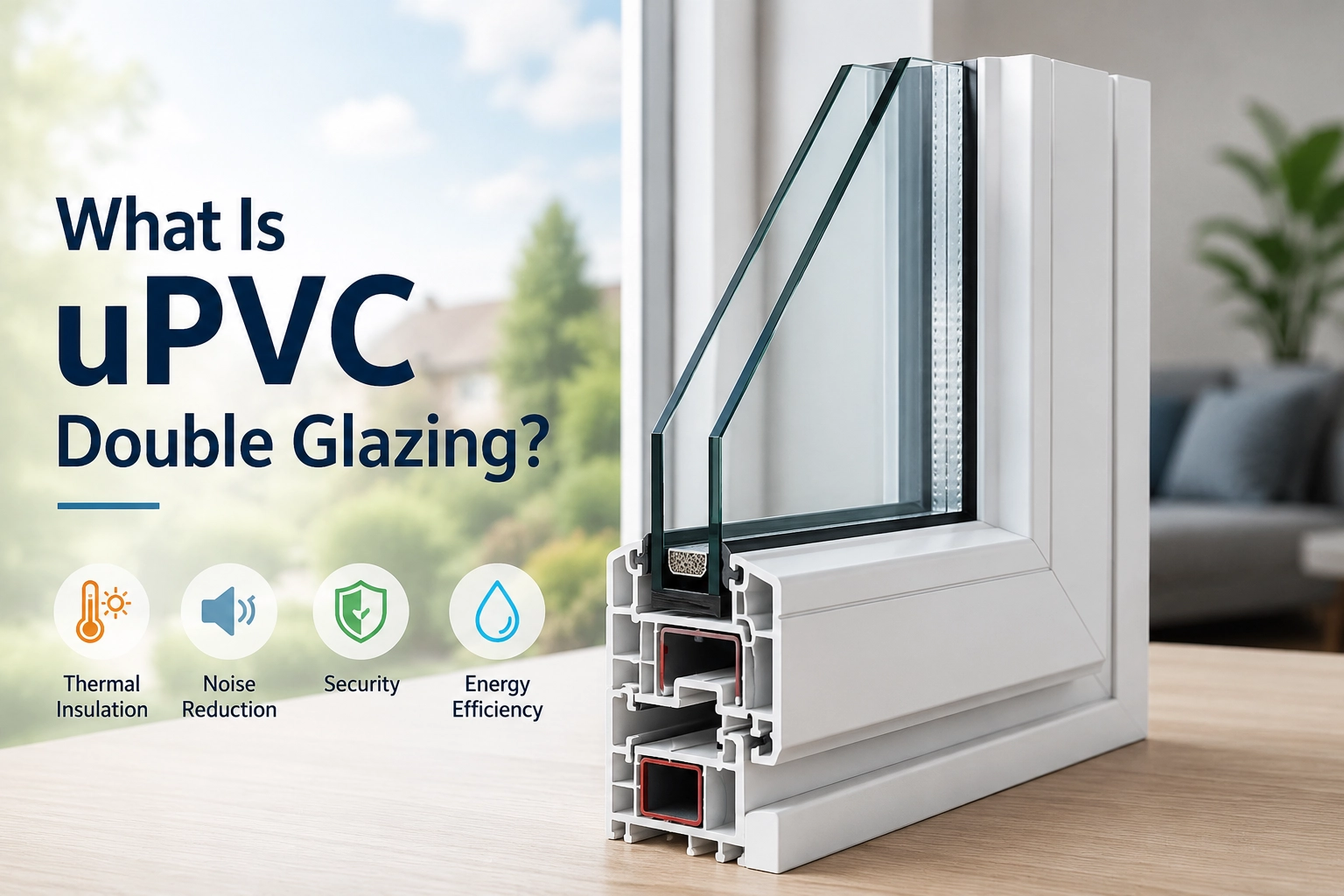
uPVC Double Glazing is a modern window system that combines durable uPVC frames with two panes of glass separated by an insulating air or gas-filled gap. This design improves thermal insulation, reduces outside noise, and increases energy efficiency in homes.
What is uPVC window frame?
uPVC (Unplasticized Polyvinyl Chloride) is a strong, low-maintenance material that resists moisture, corrosion, UV rays, and harsh weather conditions. In Australia, uPVC double glazing is especially popular because it performs well in both hot summers and cold winters.
Double Glazing VS single Glazing
| Factor | Single Glazing | Double Glazing | Difference |
|---|---|---|---|
| Glass panes | 1 | 2 | +100% |
| Typical U-value | 5.5–6.9 W/m²K | 3.0–4.2 W/m²K | Up to ~50% lower |
| Heat loss through glass | 100% baseline | Up to ~30% lower | Up to 30% reduction |
| Heating & cooling energy | 100% baseline | Up to ~25% lower* | Up to 25% saving |
| Noise reduction | ~25–30 dB | ~30–39 dB | +5–9 dB |
| Condensation | High | Low | Significant reduction |
| Typical installed cost | ~$400–$900/window | ~$900–$2,000/window | ~$500–$1,100 more |
| Typical cost per m² | Lower | ~$750–$1,500/m² | Higher upfront cost |
| Annual energy saving | $0 baseline | Potentially $500+ per year | Depends on home |
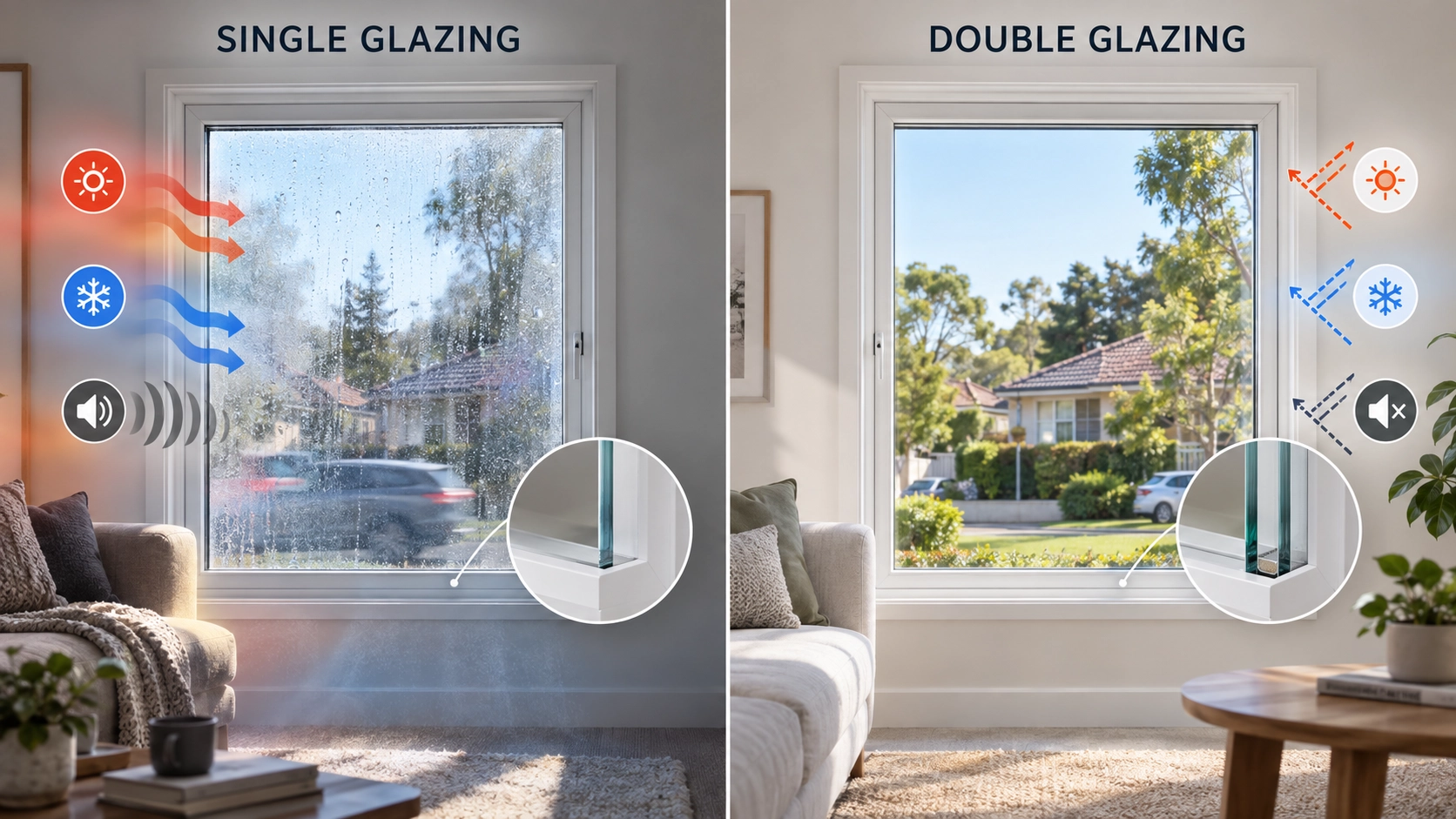
Double Glazing vs Single Glazing: By the Numbers
Actual energy savings vary depending on climate, window size, orientation, frame type and heating/cooling usage. Australian government guidance reports that double glazing can reduce heat loss through windows by up to 30%. NSW government guidance also gives a potential saving of $500+ per year for some homes.
Which One Offers Better Value?
Single glazing has the lower upfront cost, typically around $400–$900 per window installed. However, its U-value is much higher, meaning it allows more heat to move through the window.
Double glazing usually costs around $900–$2,000 per window installed, but can provide substantially better insulation. Standard double glazing can have a U-value around 3.0–4.2 W/m²K, compared with around 5.5–6.9 W/m²K for common single-glazed windows. A lower U-value means better insulation.
In simple terms: you may pay roughly 2× the upfront cost for double glazing, but you can potentially reduce heat loss by up to 30% and heating/cooling energy use by around 25%, making double glazing the stronger long-term option for many Australian homes
uPVC Window Frame vs Other Frame Types
| Factor | uPVC | Standard Aluminium | Thermally Broken Aluminium | Timber |
|---|---|---|---|---|
| Thermal conductivity | ~0.17 W/m·K | ~160–200 W/m·K | ~160–200 W/m·K* | ~0.12–0.20 W/m·K |
| Typical frame U-value | ~1.5–2.0 W/m²K | ~5.0–7.0 | ~2.0–3.0 | ~1.5–2.0 |
| Heat transfer | Very Low | Very High | Low | Very Low |
| Energy efficiency | 90–95% | 60–70% | 80–90% | 90–95% |
| Maintenance | 1–2 times/year | 1 time/year | 1 time/year | 2–4 times/year |
| Expected lifespan | 30–40+ years | 30–40+ years | 30–40+ years | 20–50+ years |
| Corrosion resistance | Excellent | Good | Good | Excellent |
| Typical price | $ | $$ | $$$ | $$$–$$$$ |
*Thermal-break aluminium uses an insulating barrier that significantly reduces heat transfer through the frame.
Why Choose uPVC?
With a typical frame U-value of around 1.5–2.0 W/m²K, uPVC provides significantly better thermal insulation than standard aluminium at around 5.0–7.0 W/m²K. This means less heat transfer, lower heating and cooling demand, and more stable indoor temperatures. uPVC also requires considerably less maintenance than timber, making it a practical option for Australian homes.
Best overall: uPVC
Best for slim modern frames: Thermally Broken Aluminium
Best for lowest upfront cost: Standard Aluminium
Best for natural appearance: Timber
Parts of a uPVC Double Glazed Window Explained
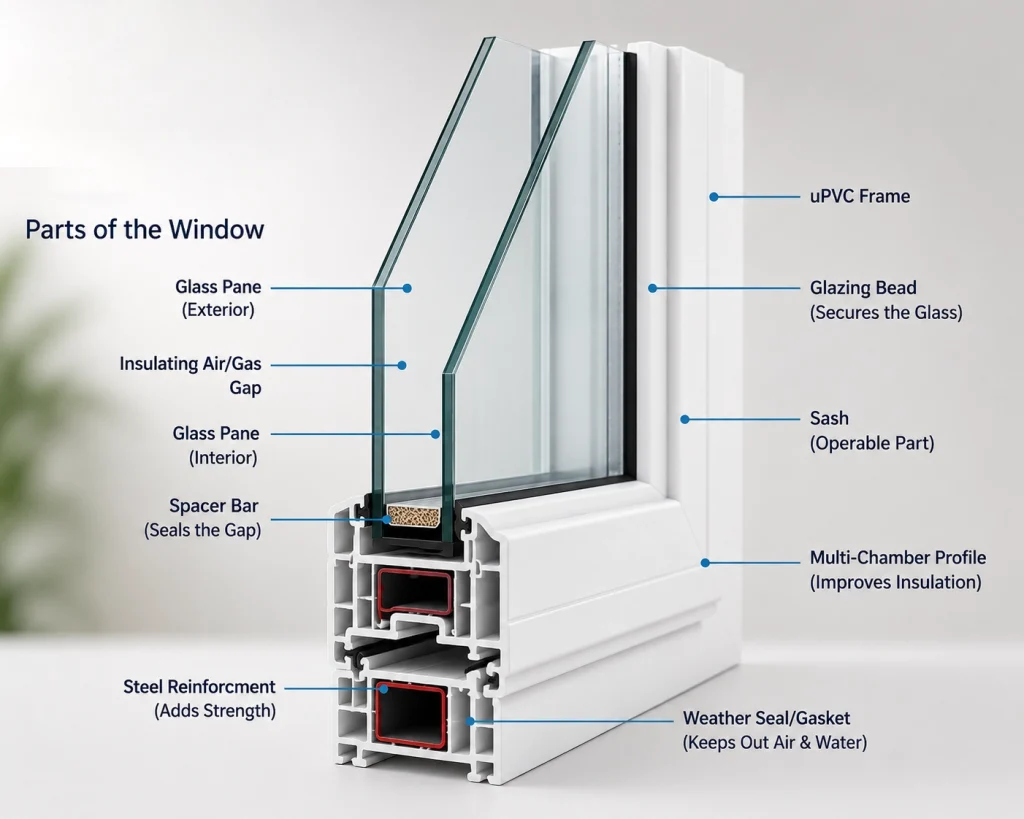
1. uPVC Frame
The uPVC frame is the main structure of the window. It is strong, weather-resistant, and designed to provide excellent insulation while requiring very little maintenance.
2. Glass Panes
Double glazed windows use two separate glass panes. These panes help reduce heat transfer and improve sound insulation inside the home.
3. Insulating Air/Gas Gap
The space between the two glass panes is filled with air or insulating gas such as argon. This gap reduces heat loss and improves energy efficiency.
Double Glazing=Two Glass Panes+Insulating Air/Gas Gaptext{Double Glazing} = text{Two Glass Panes} + text{Insulating Air/Gas Gap}Double Glazing=Two Glass Panes+Insulating Air/Gas Gap
4. Spacer Bar
The spacer bar separates the two glass panes and helps maintain the insulating gap. It also contains moisture-absorbing materials to prevent condensation.
5. Glazing Bead
The glazing bead secures the glass unit firmly inside the frame and helps improve the window’s sealing and stability.
6. Sash
The sash is the movable part of the window that opens and closes. It holds the glass unit securely within the frame.
7. Multi-Chamber Profile
Inside the uPVC frame are multiple chambers designed to trap air. These chambers improve thermal insulation and increase the window’s strength.
8. Steel Reinforcement
Steel reinforcement is placed inside the frame to provide additional structural support and durability, especially for larger windows.
9. Weather Seal / Gasket
The weather seal prevents air leakage, water penetration, and drafts. It helps maintain indoor comfort in different weather conditions.
How Does uPVC Double Glazing Work?
uPVC double glazing works by creating a thermal barrier that slows down heat transfer.
The two glass panes are separated by a sealed space filled with air or inert gas such as argon. This gap acts as insulation, helping keep warm air inside during winter and reducing heat entering the home during summer.
Q=kAΔTdQ = frac{kADelta T}{d}Q=dkAΔT
In simple terms, the insulating gap reduces the amount of heat that can pass through the window.
At the same time, the uPVC frame itself provides additional insulation because it does not conduct heat as easily as materials like aluminium.
This combination helps create a more stable indoor temperature throughout the year.
uPVC vs Aluminium vs Timber Windows
Choosing the right window material depends on your budget, climate, and maintenance preferences.
| Feature | uPVC | Aluminium | Timber |
|---|---|---|---|
| Thermal Insulation (U-Value) | 1.2–1.8 W/m²K | 2.5–4.5 W/m²K* | 1.4–2.0 W/m²K |
| Noise Reduction | 30–40 dB | 25–35 dB | 28–38 dB |
| Expected Lifespan | 30–40+ Years | 35–45+ Years | 20–40 Years |
| Maintenance | Low | Low | High |
| Weather Resistance | Excellent | Excellent | Good |
| Typical Cost (Australia) | AUD $700–$1,500 | AUD $900–$2,000 | AUD $1,200–$2,800 |
uPVC Windows
uPVC windows are widely recognized for their excellent thermal performance and low maintenance requirements. Unlike metal frames, uPVC does not conduct heat easily, making it an ideal choice for improving indoor comfort and reducing heating and cooling costs.
They are also resistant to moisture, corrosion, termites, and UV exposure, making them suitable for Australia’s diverse climate. Since they never need painting or sealing, maintenance is usually limited to occasional cleaning with soap and water.
Best for:
- Energy-efficient homes
- Low-maintenance living
- Noise reduction
- Coastal and humid environments
Aluminium Windows
Aluminium windows are known for their modern appearance, slim frames, and exceptional structural strength. They allow for larger glass panels and contemporary architectural designs.
However, aluminium is a highly conductive material, meaning it transfers heat more easily than uPVC unless it includes a thermal break. While it requires very little maintenance and offers outstanding weather resistance, its insulation performance is generally lower than uPVC.
Best for:
- Modern homes
- Large window openings
- Commercial buildings
- Contemporary architectural designs
Timber Windows
Timber windows provide a timeless, natural appearance that many homeowners appreciate. Wood is naturally insulating and can offer excellent energy efficiency when properly maintained.
The downside is that timber requires regular painting, staining, or sealing to protect it from moisture, insects, and weather damage. Without ongoing maintenance, timber frames may warp, crack, or rot over time.
Best for:
Homeowners who value natural aesthetics
Heritage homes
Traditional architecture
Premium custom-built homes
Why Choose uPVC Double Glazing?
1- Energy Efficiency
One of the biggest advantages of uPVC double glazing is improved energy efficiency. Australian summers can become extremely hot, especially in cities like Brisbane and Perth, while Melbourne and Canberra often experience cold winters.
Double glazed windows help reduce the need for constant heating and cooling, which can lower electricity bills over time.
2- Noise Reduction
uPVC double glazed windows significantly reduce outside noise. This makes them ideal for homes located near busy roads, airports, schools, or urban areas.
The dual-pane structure helps block sound vibrations, creating a quieter and more comfortable indoor environment.
3- Better Temperature Control
Double glazing helps maintain consistent indoor temperatures throughout the day. Homes stay cooler in summer and warmer in winter, improving overall comfort.
4- Reduced Condensation
Condensation often forms on single glazed windows when warm indoor air meets cold glass surfaces. Double glazing reduces this issue by improving thermal insulation.
Less condensation can also help prevent mould and moisture damage.
5- Low Maintenance
uPVC frames require very little maintenance compared to timber windows. They do not need repainting, sealing, or regular treatment.
Cleaning usually involves only soap and water.
6- UV Protection
Many modern double glazed windows include coatings that help reduce harmful UV rays entering the home. This can protect furniture, flooring, and curtains from fading over time.
Drawbacks of uPVC Double Glazing
Although uPVC double glazing offers many advantages, there are also some limitations to consider.
1- Higher Initial Cost
Double glazed uPVC windows are generally more expensive upfront than standard single glazed windows. However, many homeowners recover part of the cost through long-term energy savings.
2- Professional Installation Required
Proper installation is essential for performance and energy efficiency. Poor installation can lead to air leaks, condensation problems, and reduced insulation.
3- Limited Repair Options
If the sealed glass unit becomes damaged, the entire panel may need replacement instead of a simple repair.
Is uPVC Double Glazing Suitable for Australian Climate?
Yes. uPVC double glazing performs very well across different Australian climate zones.
In Melbourne and Canberra, double glazing improves insulation during colder winters. In Sydney, Brisbane, and Perth, it helps reduce heat transfer and keeps homes cooler during summer.
For coastal areas, uPVC is also beneficial because it resists corrosion caused by salty air and humidity.
Australian homeowners increasingly choose double glazed windows to improve comfort and reduce reliance on air conditioning systems.
Cost of uPVC Double Glazing in Australia
The cost of uPVC double glazed windows in Australia depends on several factors, including:
- Window size
- Glass type
- Frame quality
- Installation complexity
- Number of windows
On average, homeowners can expect to pay anywhere from several hundred to several thousand dollars per window installation project.
While the upfront investment may seem high, many homeowners see long-term value through reduced energy bills, increased property value, and improved comfort.
Maintenance and Lifespan
uPVC double glazed windows are designed to last for decades with minimal maintenance.
To keep them in good condition:
- Clean frames regularly with mild soap and water
- Check seals occasionally
- Lubricate moving parts when necessary
- Avoid abrasive cleaning products
High-quality uPVC windows can often last 20–30 years or more when properly maintained.
Frequently Asked Questions
What is the difference between uPVC and double glazing?
uPVC refers to the window frame material, while double glazing refers to the two-pane glass system used for insulation.
Is uPVC double glazing energy efficient?
Yes. uPVC double glazing helps reduce heat transfer, improving insulation and lowering heating and cooling costs.
Does double glazing reduce noise?
Yes. Double glazed windows significantly reduce external noise compared to single glazed windows.
Are uPVC windows better than aluminium?
uPVC generally provides better thermal insulation, while aluminium is often preferred for slim modern designs. The best choice depends on your priorities and budget.
How long do uPVC double glazed windows last?
High-quality uPVC windows can last more than 20 years with proper maintenance.