
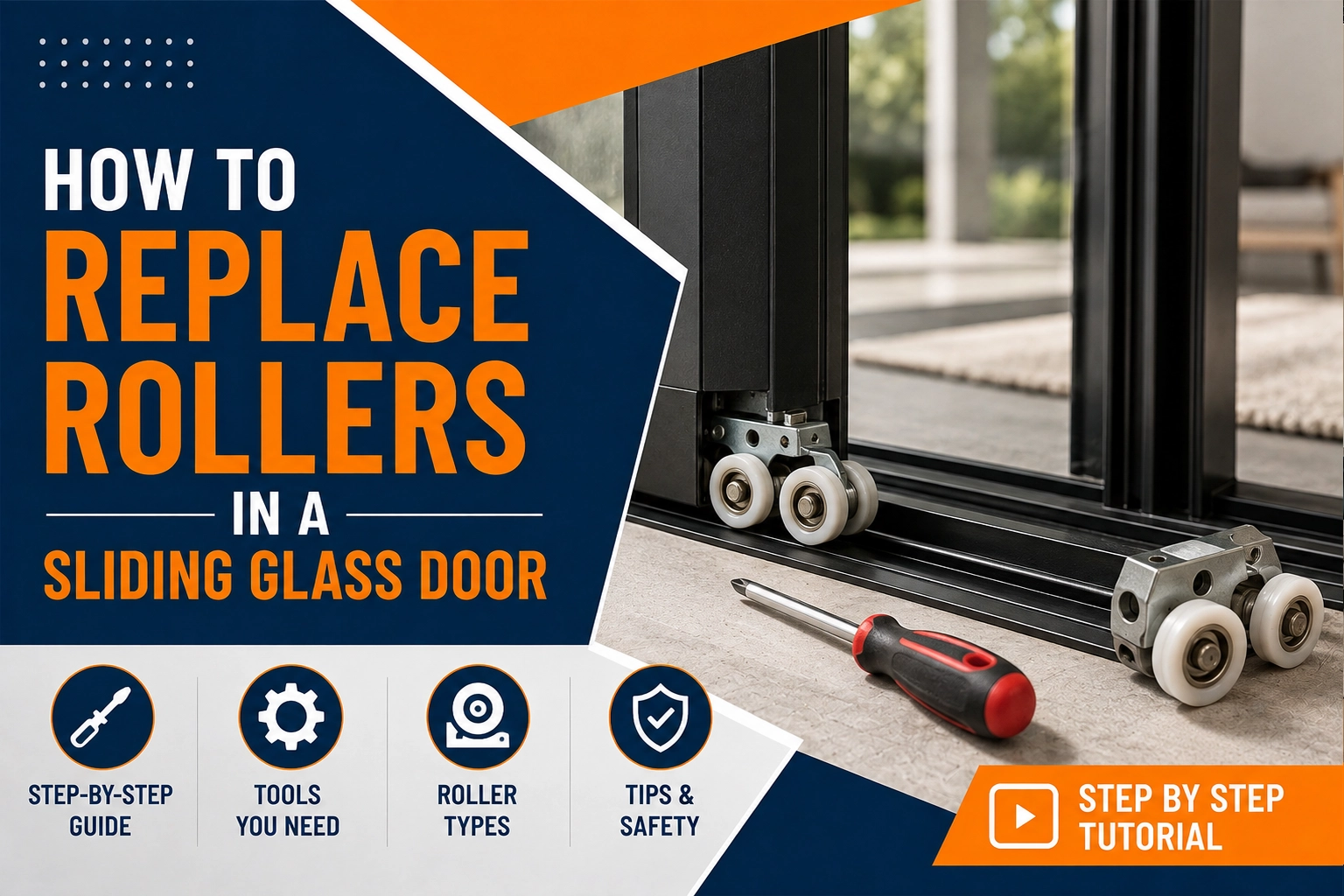
If your sliding glass door has become difficult to open, sticks halfway, or makes a grinding noise every time you move it, worn rollers are usually the cause.
In most cases, replacing the rollers restores smooth operation without replacing the entire door. However, if the glass panel itself is damaged, you may need professional glass replacement services instead of a roller repair.
This guide explains every step in detail, covers common mistakes to avoid, discusses replacement costs in Melbourne, and helps you decide whether a DIY repair or professional service is the better option.
What If You Don’t Replace Your Sliding Glass Door Rollers?
Ignoring worn rollers can cause more expensive problems over time. The door may become harder to operate, damage the track, or put extra stress on the frame and glass.
Continued use can also cause:
- Damage to the sliding track
- Misalignment of the door
- Extra wear on the frame and hardware
- Difficulty locking the door
- Higher repair or replacement costs
Replacing worn rollers early is usually a simple and cost-effective way to prevent further damage.
Signs Your Sliding Glass Door Rollers Are Worn Out
Before removing the door, make sure the rollers are actually causing the problem. Dirty tracks, damaged frames, or incorrect adjustment can create similar symptoms.
Common signs of worn sliding door rollers include:
- The door requires excessive force to slide.
- The door sticks or stops at certain points.
- Grinding, scraping, or clicking noises occur while opening.
- The door feels uneven or drops slightly when moving.
- The bottom of the frame rubs against the track.
- The door jumps or wobbles during operation.
- You notice flat spots, rust, or broken bearings on the rollers after inspection.
If your door still slides poorly after cleaning the track, replacing the rollers is usually the next logical step.
Tip: Many homeowners assume the track is worn out when the real problem is a seized roller assembly hidden inside the bottom rail.
Tools and Materials Needed to Replace Sliding Glass Door Rollers
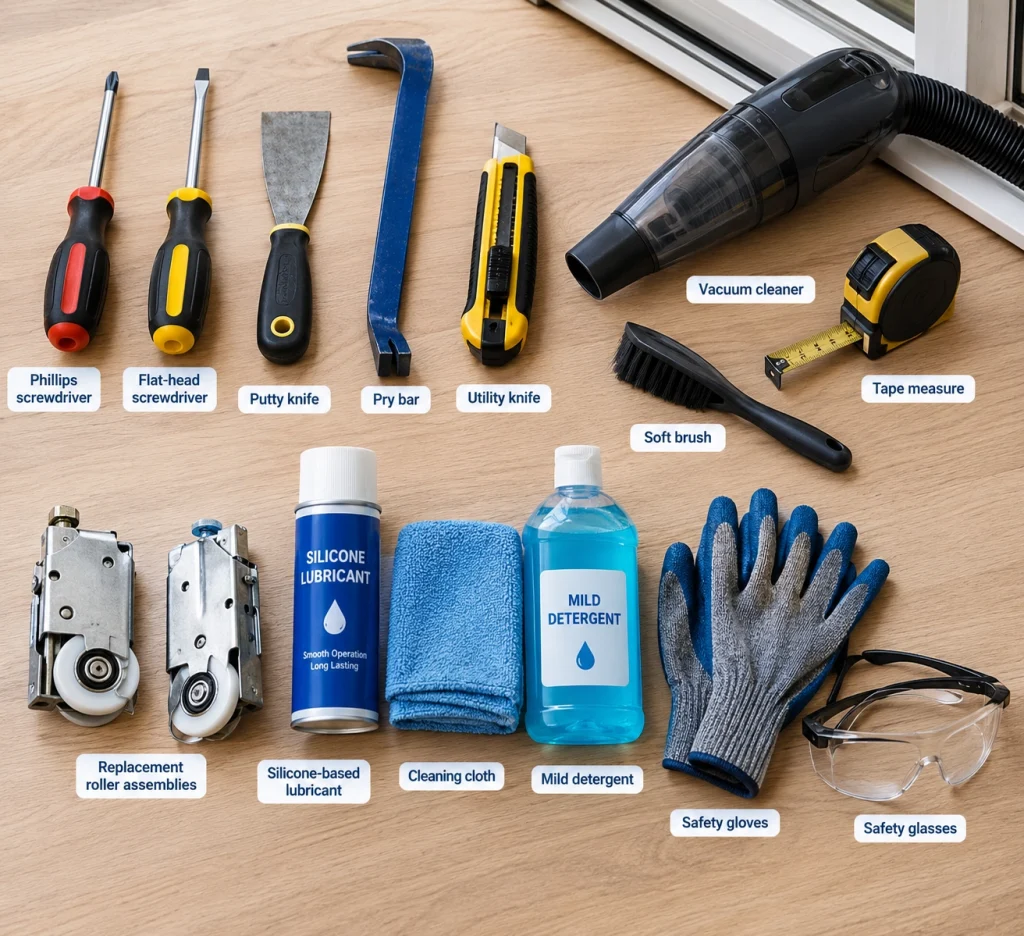
Having everything ready before removing the door makes the repair much easier.
Essential Tools
| Tool | Purpose |
|---|---|
| Phillips screwdriver | Remove adjustment and mounting screws |
| Flat-head screwdriver | Pry covers and assist removal |
| Putty knife | Lift rollers or trim |
| Pry bar | Help remove the door safely |
| Utility knife | Cut paint or old sealant |
| Vacuum cleaner | Clean debris from tracks |
| Soft brush | Remove dirt buildup |
| Tape measure | Verify replacement roller size |
Materials
- Replacement roller assemblies
- Silicone-based lubricant
- Cleaning cloth
- Mild detergent
- Safety gloves
- Safety glasses
Avoid using WD-40 as the final lubricant. While it helps loosen stuck parts, it attracts dust over time. A dry silicone spray provides much longer-lasting performance for sliding door tracks.
How to Replace Rollers in a Sliding Glass Door
Replacing sliding door rollers generally takes 1–3 hours, depending on the size of the door and the condition of the existing hardware.
The basic process includes:
- Remove the sliding panel.
- Locate the roller assemblies.
- Remove worn rollers.
- Install new rollers.
- Reinstall the door.
- Adjust the rollers until the door glides smoothly.
Let’s go through each step in detail.
Step 1: Remove the Sliding Glass Door
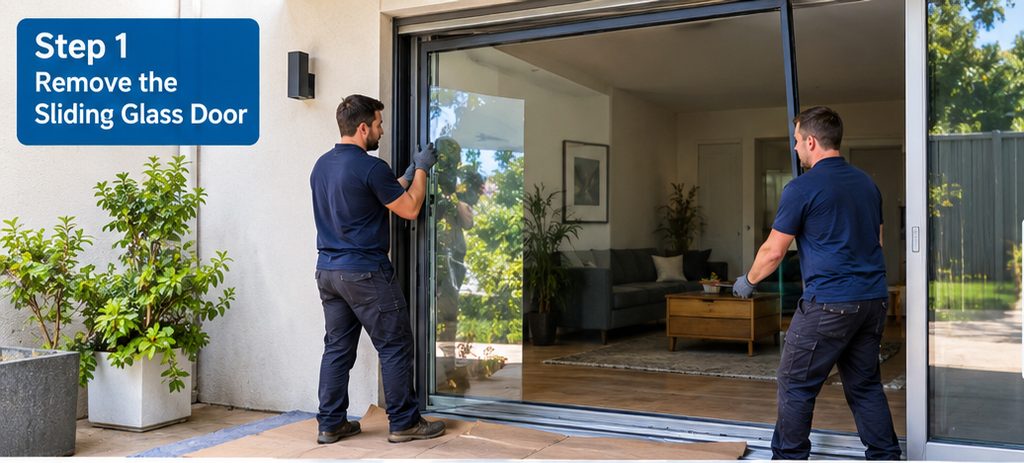
Removing the door is usually the most challenging part because sliding glass panels are heavy. A standard residential sliding glass door panel often weighs between 70 and 120 pounds (32–55 kg)
while Larger double-glazed panels can weigh considerably more, especially in modern installations using double glazed windows designed for better insulation and energy efficiency.
Before lifting the panel:
- Remove any security bars or locks.
- Fully open the door.
- Lower the rollers using the adjustment screws at the bottom edge.
- Protect the floor with cardboard or blankets.
- Ask another person to help support the glass.
To remove the panel:
- Open the door halfway.
- Lift the panel upward into the top track.
- Pull the bottom outward.
- Lower the panel carefully onto padded supports.
If the door refuses to lift out, inspect for:
- Anti-lift blocks
- Security clips
- Fixed retaining brackets
- Paint sealing the frame
Many modern sliding doors include anti-lift devices that must be removed before the panel can come out.
Safety Note: Never attempt to remove a large glass door by yourself. Tempered glass is extremely strong but can shatter if dropped or twisted during removal.
Step 2: Locate the Roller Assembly
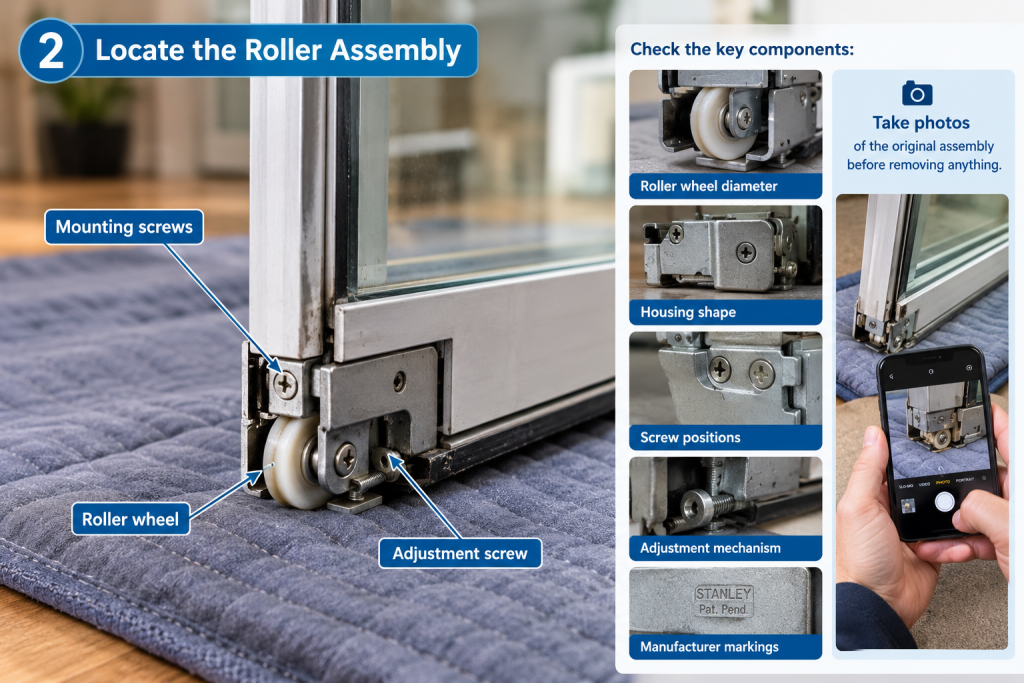
Once the panel is lying flat on padded supports, inspect the bottom edge of the frame.
Most sliding glass doors have:
- One roller assembly on each bottom corner
- Height adjustment screws
- Mounting screws securing each assembly
Understanding the different components used in sliding systems can also help when comparing repair options with full sliding glass door replacement. Others use stainless steel precision-bearing rollers for improved durability.
Before removing anything, take several photos of the original assembly. This makes installation much easier later.
Next, inspect:
- Roller wheel diameter
- Housing shape
- Screw positions
- Adjustment mechanism
- Manufacturer markings
Before ordering replacement parts, it is also important to understand your existing door type, especially for modern systems such as uPVC double glazing and insulated glass units.
Step 3: Remove the Old Rollers
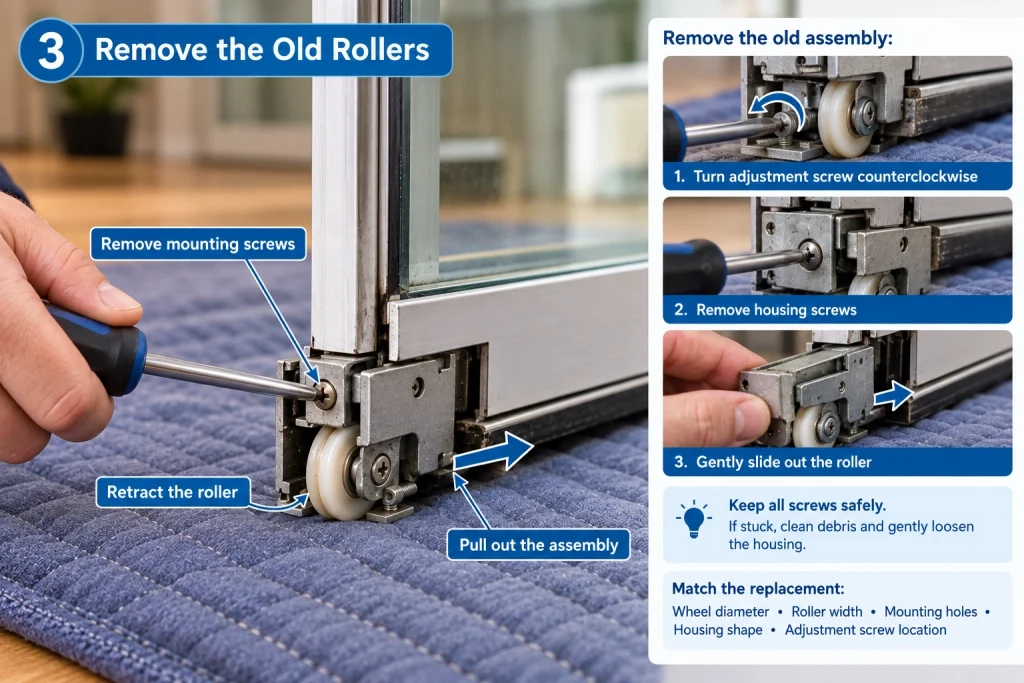
After locating the roller assembly, the next step is removing the worn rollers from the bottom of the sliding glass door.
The exact design varies depending on the door manufacturer, but most roller assemblies are secured with screws located near the bottom corners of the frame.
Follow these steps:
1. Remove the Adjustment Screw
Locate the roller adjustment screw, usually found at the bottom edge of the door frame.
Turn the screw counterclockwise to retract the roller completely into the frame. This creates more space and makes removing the assembly easier.
If the screw is difficult to turn:
- Spray a small amount of penetrating lubricant.
- Wait a few minutes.
- Clean away rust or debris.
- Avoid forcing the screw, as damaged adjustment screws can make the repair more difficult.
2. Remove the Roller Housing Screws
Once the roller is fully lowered, remove the screws holding the roller assembly in place.
Depending on the design, you may need to remove:
- Bottom corner screws
- Side mounting screws
- Small retaining brackets
Keep all screws in a safe place because replacement assemblies do not always include new hardware.
3. Pull Out the Old Roller Assembly
Carefully remove the old roller from the door frame.
If the roller is stuck:
- Use a flat screwdriver to gently loosen the housing.
- Remove dirt and corrosion around the opening.
- Avoid hitting the aluminium frame with excessive force.
Old rollers often fail because:
- Bearings become worn.
- Wheels develop flat spots.
- Dirt enters the bearing mechanism.
- Metal components rust over time.
Compare the old roller with the replacement part before installation.
Make sure the following match:
- Wheel diameter
- Roller width
- Mounting holes
- Housing shape
- Adjustment screw location
Installing the wrong roller size can cause the door to sit too high, too low, or bind inside the track.
Step 4: Install the New Rollers
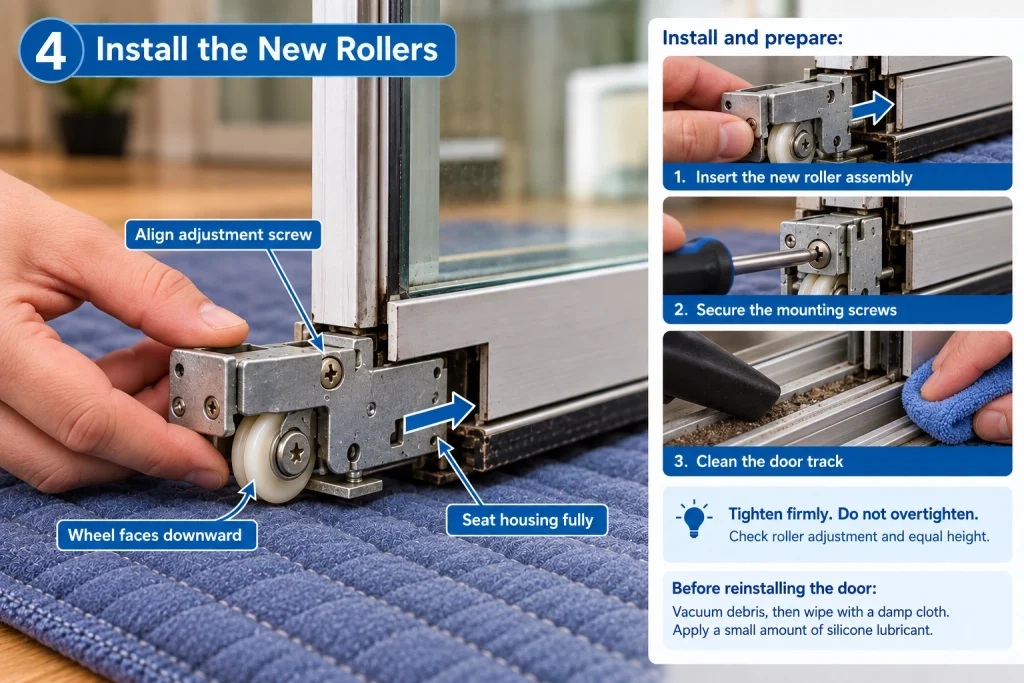
Installing new rollers is usually the reverse process of removal, but proper alignment is important.
Place the new roller assembly into the bottom corner of the sliding door frame.
Follow these steps:
1. Insert the New Roller Assembly
Slide the replacement roller into the same position as the old unit.
Make sure:
- The wheel faces downward toward the track.
- The adjustment screw lines up with the access hole.
- The housing sits completely inside the frame.
A poorly seated roller can create uneven movement or cause premature wear.
2. Secure the Roller With Screws
Reinstall the mounting screws and tighten them firmly.
Do not overtighten the screws because excessive pressure can damage aluminium frames or strip screw holes.
After securing the roller:
- Turn the adjustment screw slightly.
- Confirm that the roller moves up and down correctly.
- Check that both rollers are installed at the same height.
3. Clean the Door Track Before Reinstallation
Before placing the door back into position, clean the sliding track thoroughly.
A new roller installed on a dirty track may still feel difficult to operate.
Remove:
- Dust
- Sand
- Pet hair
- Old lubricant residue
- Small stones or debris
Use a vacuum first, then wipe the track with a damp cloth.
For better performance, apply a small amount of silicone lubricant after cleaning.
Step 5: Reinstall the Sliding Glass Door
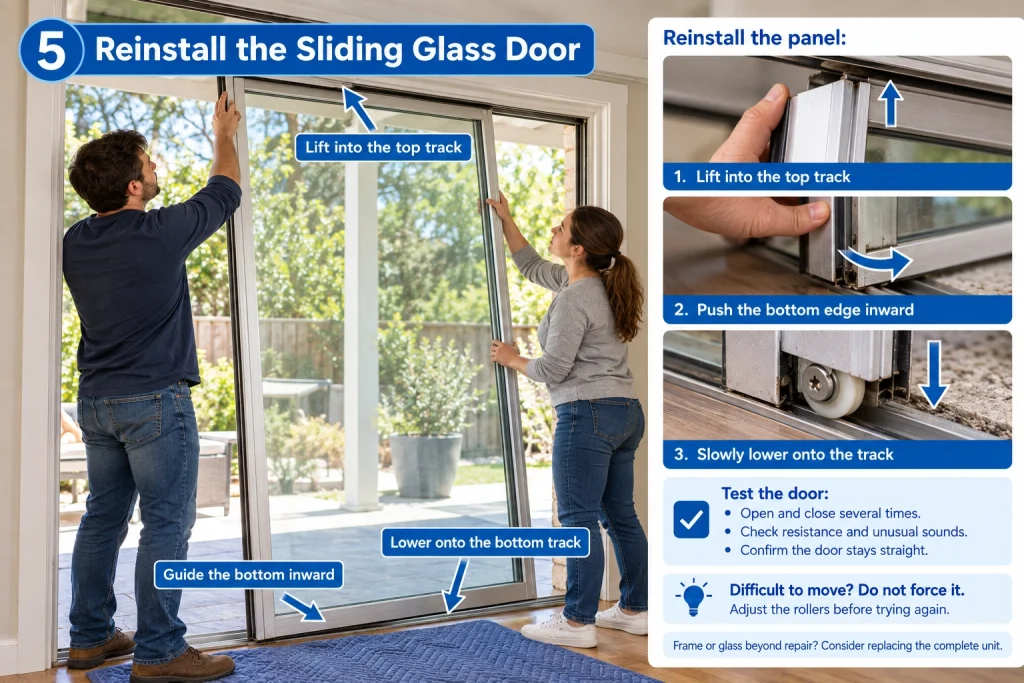
Reinstalling the door requires patience because the glass panel must sit correctly inside both the upper and lower tracks.
Follow these steps:
- Lift the sliding panel into the top track.
- Push the bottom edge inward.
- Slowly lower the door onto the bottom track.
- If the existing frame or glass panel is beyond repair, replacing the complete unit may be a better option. Learn more about how much it costs to replace a glass door
After installation:
- Open and close the door several times.
- Check for resistance.
- Listen for unusual sounds.
- Confirm that the door remains straight.
If the door feels difficult to move, do not force it. The rollers likely need adjustment.
Step 6: Adjust the Rollers for Smooth Operation
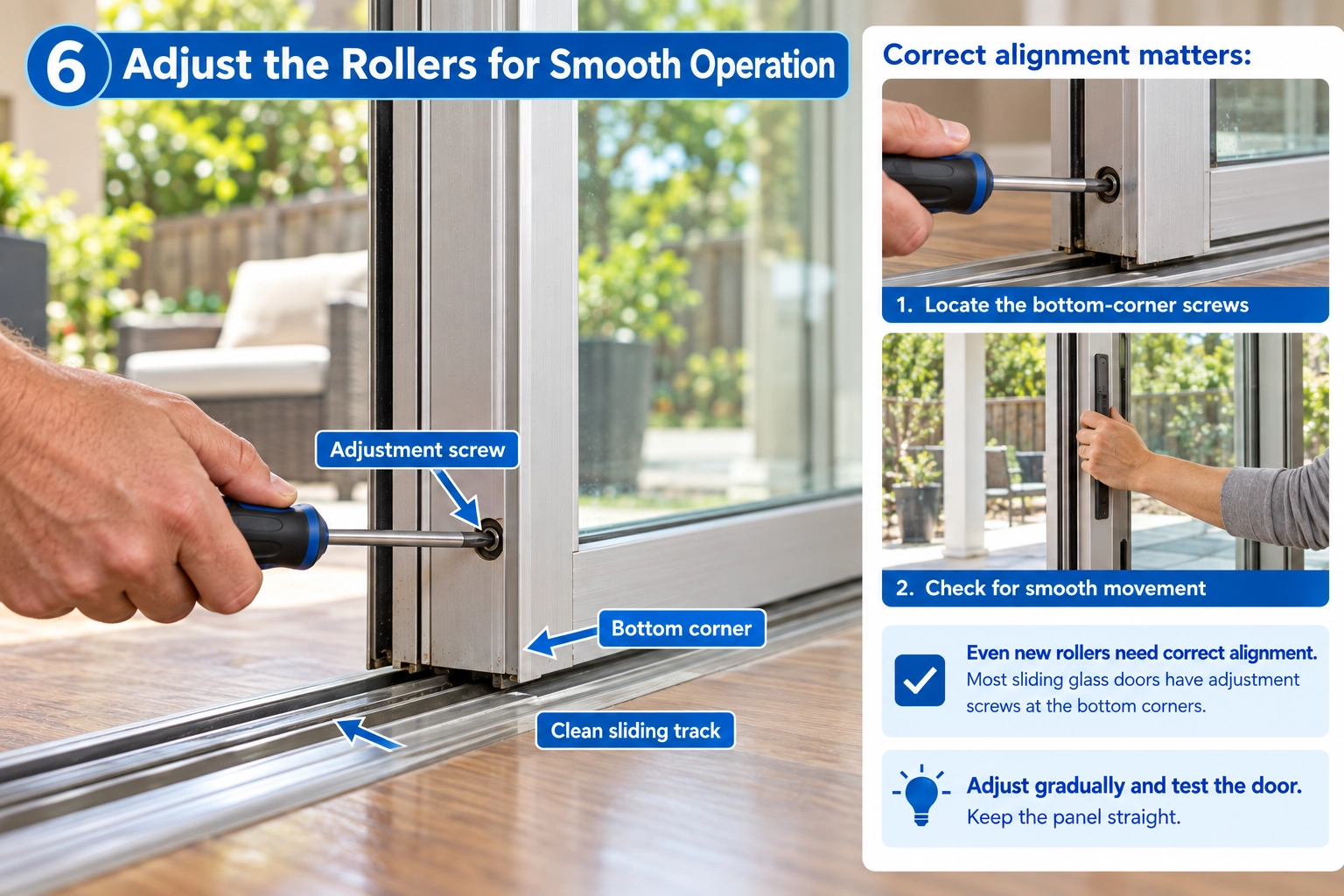
Roller adjustment is one of the most important parts of the replacement process.
Even brand-new rollers will not work properly if they are not aligned correctly.
Most sliding glass doors have adjustment screws located at the bottom corners.
To adjust the door:
- Turn the adjustment screw clockwise to raise the roller.
- Turn the adjustment screw counterclockwise to lower the roller.
Make small adjustments, usually a quarter turn at a time.
The correct adjustment should allow the door to:
- Slide smoothly with minimal effort.
- Stay parallel with the frame.
- Close evenly against the latch.
- Avoid rubbing against the track.
How to Know Your Sliding Door Rollers Are Adjusted Correctly
A properly adjusted sliding glass door should:
✅ Move smoothly with one hand
✅ Stay level while opening and closing
✅ Lock without forcing the handle
✅ Have an even gap around the frame
✅ Operate quietly without scraping sounds
If one side of the door is higher than the other, adjust the rollers gradually until the panel is square.
Common Problems When Replacing Sliding Glass Door Rollers
Although replacing rollers is a straightforward repair, homeowners often encounter a few problems.
The Replacement Rollers Do Not Fit
One of the most common mistakes is buying the wrong roller assembly.
Sliding doors use many different roller designs, including:
- Nylon rollers
- Steel rollers
- Tandem rollers
- Ball-bearing rollers
- Adjustable roller assemblies
Always measure the original roller before purchasing a replacement.
The Sliding Door Still Does Not Move Smoothly
If new rollers do not solve the problem, check:
Damaged Track
A bent or damaged aluminium track can prevent smooth movement.
Signs of track damage include:
- Deep grooves
- Flat areas
- Visible cracks
- Uneven surfaces
Similar issues can occur with older patio systems, where homeowners may consider patio door glass replacement instead of replacing the entire door.
The Door Comes Off the Track
If the door repeatedly jumps off the track, possible causes include:
- Rollers installed incorrectly
- Incorrect roller height
- Damaged bottom frame
- Missing anti-lift blocks
Adjust the rollers carefully and confirm the door sits securely inside the frame.
The Adjustment Screw Is Stuck
Older sliding doors often have seized adjustment screws because of:
- Rust
- Dirt buildup
- Lack of maintenance
Try:
- Cleaning around the screw opening
- Applying penetrating lubricant
- Using the correct screwdriver size
Avoid damaging the screw head because replacement parts can be difficult to source for older doors.
How to Clean and Lubricate Sliding Door Tracks
Replacing the rollers will improve your sliding glass door operation, but regular cleaning and lubrication are essential to keep the new rollers working properly.
Dirt, sand, and debris build up inside sliding door tracks over time. This creates extra friction and forces the rollers to work harder, reducing their lifespan.
Follow these maintenance steps:
Step 1: Remove Dirt and Debris
Start by vacuuming the entire track area.
Pay attention to:
- Corners of the track
- Areas where rollers travel
- Small gaps inside the aluminium frame
Use a soft brush to loosen stubborn dirt.
Step 2: Clean the Track Surface
Mix warm water with a mild household cleaner and wipe the track using a microfiber cloth.
Avoid harsh chemicals that may damage:
- Aluminium frames
- Protective finishes
- Weather seals
Allow the track to dry completely before applying lubricant.
Step 3: Apply Silicone Lubricant
Use a silicone-based sliding door lubricant designed for tracks and moving hardware.
Apply a light coating along the roller path.
Avoid:
- Grease-based lubricants
- Heavy oils
- Products that attract dust
Too much lubricant can actually collect debris and make the door harder to operate.
Proper maintenance is especially important for large glazed openings, including modern sliding glass doors installed in residential and commercial properties.
Can You Replace Sliding Glass Door Rollers Without Removing the Door?
In some cases, sliding glass door rollers can be adjusted or replaced without completely removing the door, but it depends on the door design.
Some modern sliding doors include access panels that allow roller removal while the door remains installed. However,
Before replacing hardware, it is useful to check whether your current door matches common sliding glass door sizes, as oversized systems often require specialised parts.
Trying to replace rollers without removing the door can create problems such as:
- Limited access to screws
- Difficulty aligning the new rollers
- Damage to the door frame
- Increased risk of dropping the glass panel
For most residential sliding doors, removing the panel is the safest and most reliable method.
If you have a large double-glazed sliding door or a heavy stacker door system, professional assistance is recommended because these panels can be extremely heavy.
How Much Does It Cost to Replace Sliding Glass Door Rollers?
The cost to replace sliding glass door rollers depends on whether you complete the repair yourself or hire a professional.
In Melbourne, homeowners typically pay:
| Service | Average Cost |
|---|---|
| Replacement rollers only | $20–$100 per pair |
| DIY replacement cost | $50–$150 including materials |
| Professional roller replacement | $150–$400 |
| Full sliding door repair service | $250–$600+ |
If repair costs become too high, some homeowners compare this option with a complete replacement. Current pricing factors are explained in our guide to sliding glass door replacement costs
The final price depends on:
- Door size
- Roller type
- Number of rollers required
- Accessibility
- Condition of the track
- Whether additional repairs are needed
For example, a standard aluminium sliding door with common rollers is usually inexpensive to repair, while large double-glazed doors may require specialised hardware and additional labour.
DIY vs Professional Sliding Door Roller Replacement
Replacing sliding door rollers can be a suitable DIY project for homeowners who are comfortable using basic tools. However, not every sliding door is easy to repair.
DIY Roller Replacement
Advantages
- Lower repair cost
- No waiting for a technician
- Good option for standard sliding doors
- Basic tools are usually enough
Disadvantages
- Glass doors are heavy and difficult to handle
- Incorrect installation can damage the frame
- Finding the correct replacement roller can be challenging
- Adjustment may require trial and error
Professional Sliding Door Repair
Hiring a professional may be the better choice when:
- The door is oversized or double glazed.
- The frame is damaged.
- The rollers are difficult to access.
- The track needs repair.
- The door is expensive or custom-made.
This is particularly important for larger residential openings or commercial installations such as commercial doors and windows where safety and alignment are critical.
A professional can also inspect other components, including:
- Locks
- Handles
- Weather seals
- Tracks
- Door alignment
For homeowners in Melbourne, professional sliding door repair can often save time and prevent accidental damage to expensive glass panels.
How Long Do Sliding Glass Door Rollers Last?
The average lifespan of sliding glass door rollers is around 8 to 12 years, although this can vary depending on usage, maintenance, and environmental conditions.
Factors that affect roller lifespan include:
- How frequently the door is opened and closed
- Exposure to dust and moisture
- Quality of the original rollers
- Door weight
- Regular cleaning and lubrication
Coastal areas around Melbourne may experience faster hardware wear because salt air can accelerate corrosion on metal components.
To extend roller life:
- Clean tracks regularly.
- Avoid forcing a stuck door.
- Repair track damage early.
- Use silicone lubricant periodically.
- Replace worn rollers before they damage the frame.
Frequently Asked Questions
How do I know if my sliding glass door rollers need replacing?
If your door is difficult to slide, makes grinding noises, sticks, or feels uneven, worn rollers are often the cause. Cleaning the track first can help determine whether replacement is necessary.
How long does it take to replace sliding glass door rollers?
Most roller replacement projects take between 1 and 3 hours, depending on the door type and the condition of the existing hardware.
Can I replace sliding door rollers myself?
Yes, many homeowners can replace rollers themselves using basic tools. However, large glass panels can be heavy, so having another person assist is strongly recommended.
Should I replace both sliding door rollers at the same time?
Yes. Most sliding doors use two roller assemblies, and replacing both at the same time helps maintain even movement and prevents uneven wear.
Why is my sliding glass door still hard to open after replacing rollers?
Possible causes include:
- Dirty tracks
- Incorrect roller adjustment
- Damaged tracks
- Incorrect replacement rollers
- Misaligned door frame
Adjust the rollers and clean the track before considering additional repairs.
How often should sliding door tracks be cleaned?
Sliding door tracks should ideally be cleaned every 3–6 months, especially in areas with high dust, coastal exposure, or heavy door usage.
Are nylon or metal sliding door rollers better?
Both have advantages. Nylon rollers operate quietly and resist corrosion, while metal or stainless-steel rollers are often stronger for heavier doors. The best option depends on your door type and weight.
Roller choice can also depend on the type of glass system installed, including options such as laminated glass vs double glazing
Final Thoughts
Replacing rollers in a sliding glass door is one of the most effective ways to restore smooth operation without replacing the entire door. With the right tools, correct replacement parts, and careful adjustment, many homeowners can complete the repair successfully.
The most important steps are choosing the correct roller assembly, installing it properly, and maintaining the track after replacement. Regular cleaning and lubrication will help your new rollers last longer and keep your sliding door working smoothly for years.
If your sliding door has damaged tracks, broken hardware, or a heavy glass panel, professional repair may be the safer and more cost-effective solution.