
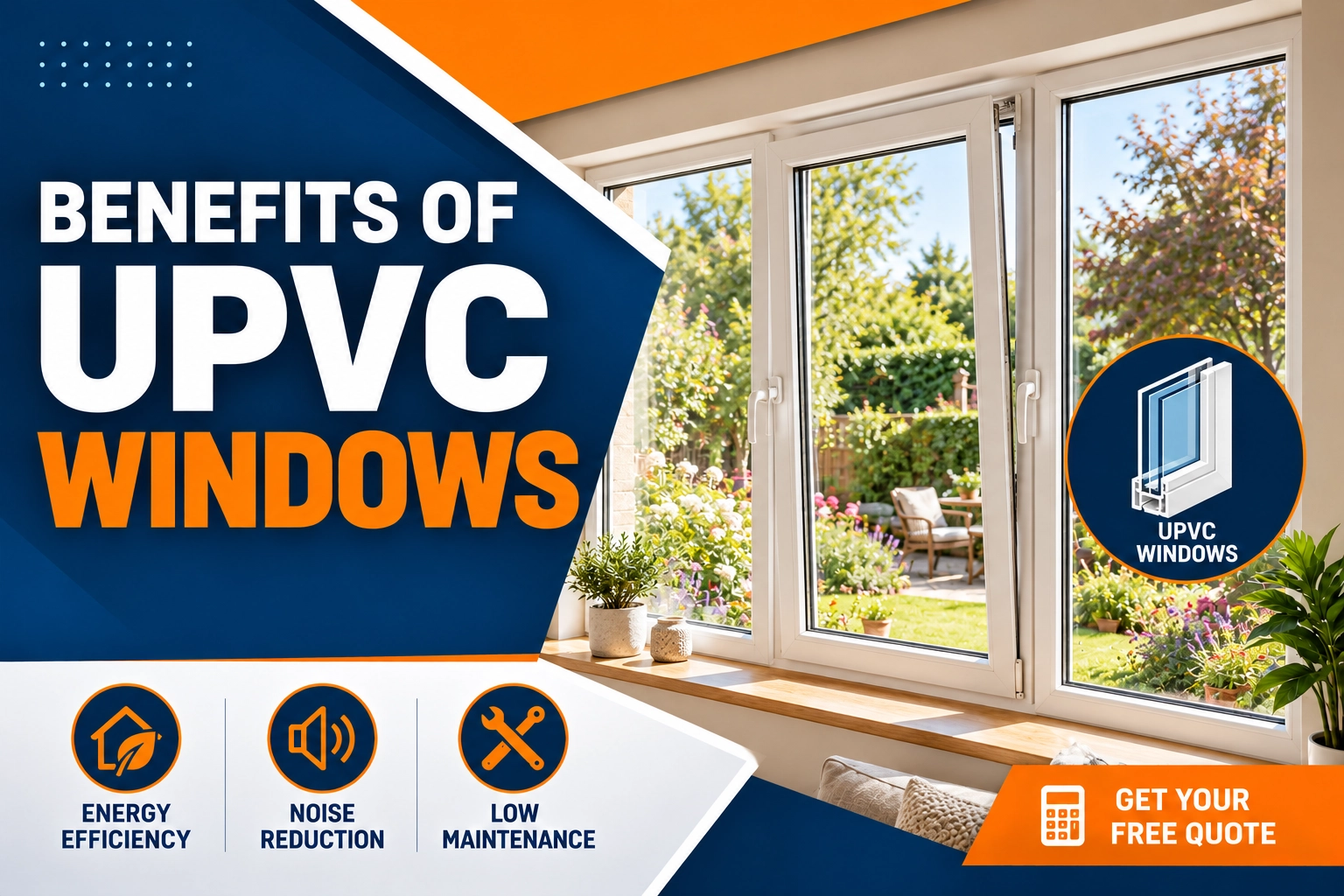
uPVC windows offer several advantages, including energy efficiency, excellent insulation, low maintenance, durability, and affordability. Compared with aluminium and timber windows, uPVC provides a practical balance of thermal performance, weather resistance, and long-term value. However, the performance of any window depends on its frame design, glazing, hardware, and installation quality.
The table below compares uPVC, aluminium, and timber windows across key performance factors, using measurable units wherever possible.
uPVC vs Aluminium vs Timber Windows: Performance Comparison
| Feature | Unit Measurement | uPVC Windows | Aluminium Windows | Timber Windows |
|---|---|---|---|---|
| Thermal Conductivity | Watts per metre per degree (W/m·K) | 0.17–0.25 | 160–200 (unbroken metal) | 0.12–0.20 |
| Whole-Window U-Value | Watts per square metre per degree (W/m²·K) | Depends on system | Depends on system | Depends on system |
| Noise Reduction | Decibels (dB) | Depends on glazing and design | Depends on glazing and design | Depends on glazing and design |
| Expected Service Life | Years | Depends on product and conditions | Depends on product and conditions | Depends on product and maintenance |
| Major Maintenance | Number of major maintenance tasks over 10 years | Usually minimal | Usually minimal | Often requires periodic painting or sealing |
| Air Permeability | Air leakage rate at a specified pressure | Depends on tested window system | Depends on tested window system | Depends on tested window system |
| Water Tightness | Standardised performance class | Depends on tested window system | Depends on tested window system | Depends on tested window system |
| Installed Cost | Cost per square metre (e.g. £/m² or $/m²) | Often lower | Often higher | Varies by timber and design |
| Frame Weight | Kilograms per square metre (kg/m²) | Depends on frame design | Depends on frame design | Depends on timber and design |
| Recycled Content | Percentage (%) | Depends on manufacturer | Depends on manufacturer | Depends on sourcing and product |
| Recyclability | Percentage (%) recoverable for recycling | Depends on local facilities and product | Depends on alloy and recycling facilities | Depends on coatings and treatments |
Note: Window performance figures should be taken from manufacturer specifications or independent test reports for the exact product. Thermal conductivity describes the frame material, while the U-value measures heat transfer through the complete window. A lower U-value generally indicates better insulation. Noise reduction should be compared using tested acoustic ratings, such as Rw in decibels. Air permeability and water tightness should be compared using the same testing standard and conditions.
1. Energy Efficiency
One of the main benefits of uPVC windows is their potential to improve a home’s energy efficiency. uPVC has relatively low thermal conductivity, meaning it transfers less heat through the frame than aluminium without a thermal break. When combined with energy-efficient double or triple glazing, well-designed uPVC windows can help reduce heat loss during winter and limit unwanted heat gain during summer.
Aluminium windows can also deliver strong thermal performance when fitted with effective thermal breaks. Timber naturally provides good insulation, making it another suitable option for energy-conscious homeowners. When comparing products, look at the whole-window U-value rather than relying on the frame material alone.
2. Excellent Thermal and Acoustic Insulation
uPVC window frames help limit heat transfer and can contribute to a more comfortable indoor environment. They can also help reduce outside noise when combined with appropriate glazing, tight seals, and professional installation.
Aluminium windows can provide comparable acoustic performance when they use suitable glass and effective sealing systems. Timber also offers good insulating properties. For an accurate comparison, check the window’s tested acoustic rating, measured in decibels, and its whole-window U-value.
3. Low Maintenance
uPVC windows are easy to maintain because the frames generally do not require regular painting, staining, or sealing. Cleaning them with mild soapy water and checking the hinges, locks, and seals periodically is usually sufficient.
Aluminium windows are also relatively low maintenance and do not rot, although their coatings may require occasional attention. Timber windows usually need more upkeep, including repainting or resealing, to protect the wood from moisture and weather damage.
4. Durability and Long-Term Performance
Quality uPVC windows are designed to withstand everyday exposure to moisture, wind, and changing temperatures. Unlike timber, uPVC does not rot, and unlike metal, it does not rust. However, prolonged UV exposure, poor-quality materials, and inadequate installation can affect their appearance and performance.
Aluminium is particularly strong and suitable for large window openings and slim frames. Timber can also last for decades when properly maintained and protected. Instead of assuming a fixed lifespan for each material, compare the manufacturer’s expected service life, warranty, maintenance requirements, and environmental suitability.
5. Weather Resistance
uPVC frames are resistant to moisture and will not swell or rot in the same way as untreated timber. Quality window systems use suitable seals, drainage channels, and frame designs to help prevent water penetration and drafts.
Aluminium also performs well in exposed environments, while timber needs appropriate coatings and regular inspections. For a measurable comparison, look for independently tested air-permeability and water-tightness classifications for each complete window system.
6. Improved Home Security
Modern uPVC windows can incorporate multi-point locking systems, reinforced profiles, secure hinges, and toughened or laminated glass. These features can help protect a property when correctly specified and installed.
Aluminium’s structural strength can be an advantage for larger windows, while timber windows can also provide good security with suitable hardware. To compare security objectively, look for recognised security certifications and tested resistance ratings rather than relying on the frame material alone.
7. Affordability and Overall Value
uPVC windows are often a cost-effective option because their initial purchase price can be competitive and their maintenance requirements are generally low. This can make them attractive for homeowners replacing several windows or working within a renovation budget.
Aluminium systems may cost more, particularly when they include premium finishes, slim profiles, or advanced thermal breaks. Timber prices vary according to the species, finish, and craftsmanship, and ongoing maintenance can add to the total cost of ownership.
For a fair comparison, request installed prices for windows of the same dimensions, glazing specification, opening style, and performance rating. Compare the total expected cost over the years you plan to own the property.
8. Wide Range of Styles and Designs
uPVC windows are available in various styles, including casement, sliding, tilt-and-turn, fixed, and bay windows. They also come in a range of colours and finishes, allowing homeowners to coordinate them with different architectural styles.
Aluminium is often preferred for contemporary properties that need slim sightlines and large glazed areas. Timber is popular in traditional homes and heritage buildings because of its natural appearance. The best option depends on the home’s design, planning requirements, budget, and desired finish.
9. Environmental Benefits and Recyclability
uPVC can be recycled and reused in the manufacture of new products, although actual recycling rates depend on collection systems, processing facilities, and product composition. Its insulation performance and long service life may also contribute to reducing a home’s energy demand.
Aluminium is highly recyclable and can be reprocessed into new products, while responsibly sourced timber is a renewable material. To compare environmental impact accurately, consider recycled content, manufacturing emissions, expected service life, operational energy savings, and end-of-life disposal rather than assuming a universal recyclability percentage.
Which Window Material Is Best?
uPVC is a strong choice for homeowners who want low maintenance, good insulation, weather resistance, and competitive upfront costs. Aluminium is worth considering for its structural strength and slim modern profiles, while timber is an attractive option for natural aesthetics and traditional architecture.
The best decision comes from comparing the specifications of complete window systems, including their U-values, acoustic ratings, weather-performance tests, security features, warranties, and installed costs.