

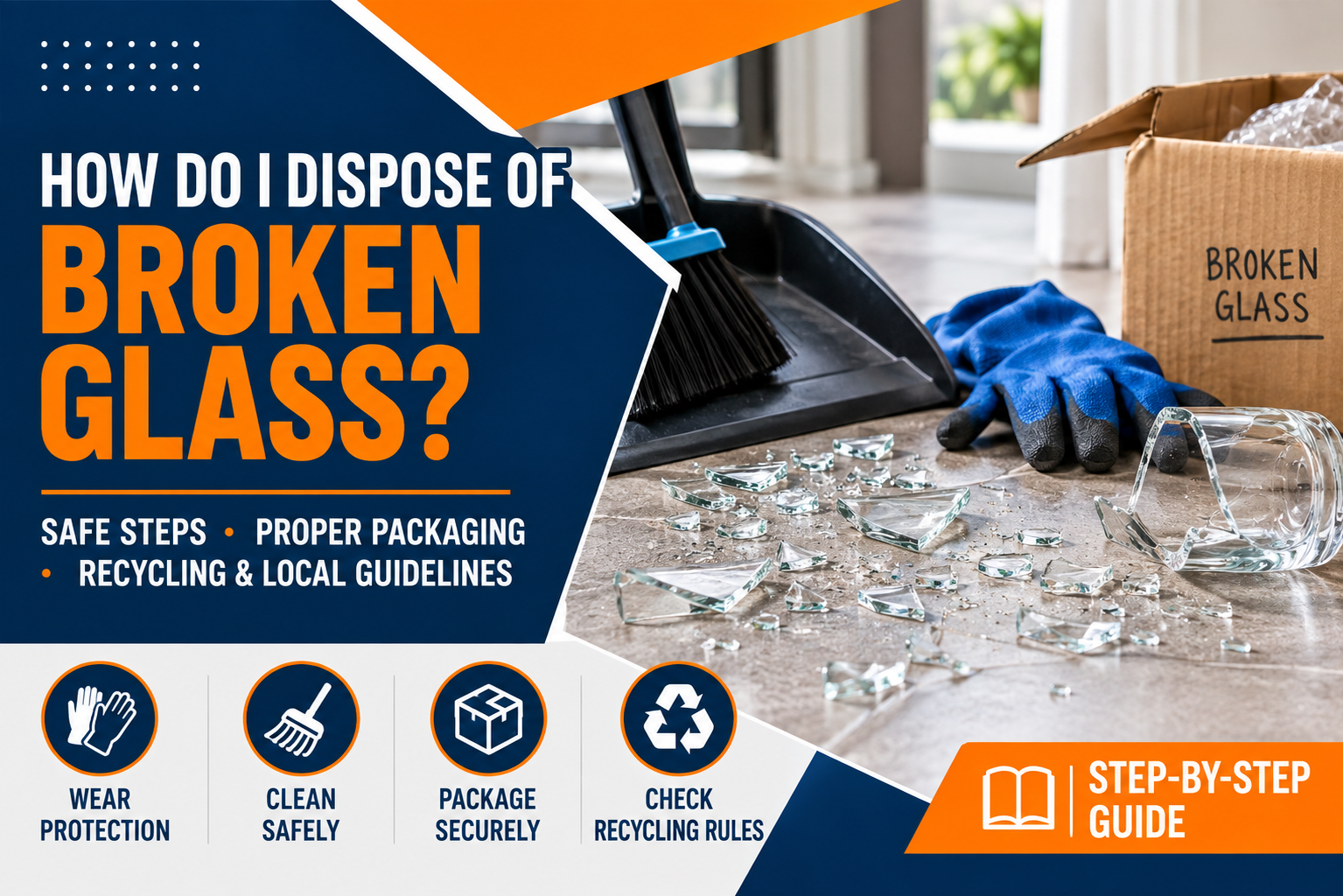
Broken glass should be handled carefully, wrapped securely and disposed of according to local waste guidelines. The safest approach is to avoid placing loose broken glass directly into rubbish or recycling bins because sharp pieces can injure people handling waste and may damage collection equipment.
The correct disposal method depends on the type of glass involved. A broken drinking glass, bottle or jar may require a different approach from a broken window pane, mirror, shower screen or large glass panel.
For most small household breakages:
- Keep children and pets away from the area.
- Wear closed shoes and protective gloves.
- Pick up large pieces carefully.
- Use a brush and dustpan for smaller fragments.
- Wrap the glass securely before disposal.
- Check disposal rules in your area before placing it in a bin.
Larger quantities, specialised glass products or glass that is still installed in a structure may require a waste facility or professional glass disposal service.
For larger or installed glass panels, professional assistance may be required. If you need replacement glass after a breakage, you can also learn more about our glass replacement services.
How to Safely Handle Broken Glass
Broken glass can create sharp hazards that are difficult to see, especially small fragments that spread across floors, carpets or surfaces.
Before cleaning:
- Move children and pets away from the area.
- Wear closed footwear to protect your feet.
- Wear protective gloves whenever possible to reduce the risk of cuts.
- Avoid picking up shards with bare hands.
Step-by-Step Process
1. Remove Large Pieces Carefully
Pick up larger pieces one at a time and avoid squeezing broken edges together.
Place larger fragments directly into suitable packaging rather than carrying them around unnecessarily.
2. Collect Smaller Fragments
Use:
- Brush and dustpan
- Soft broom
- Damp paper towel or suitable cleaning method for tiny pieces
Check nearby areas because small shards can travel further than expected.
3. Avoid Using a Vacuum Cleaner for Large Shards
A vacuum cleaner may help collect very fine particles after larger pieces have been removed.
However, large glass fragments should be collected manually first because sharp pieces may damage some vacuum cleaners or create additional safety risks.
4. Wash Your Hands After Handling
After cleaning:
- Remove gloves carefully
- Wash your hands thoroughly
- Check the area again before allowing children or pets back into the space
How to Package Broken Glass for Disposal
Correct packaging helps prevent injuries to waste workers and reduces the chance of glass cutting through rubbish bags.
The aim is to contain sharp edges and make the package strong enough for handling.
| Packaging Method | Best For | Safety Level | Key Consideration |
|---|---|---|---|
| Thick cardboard | Small pieces | High | Securely tape the package |
| Heavy-duty container | Larger shards | High | Ensure glass cannot escape |
| Wrapped box | Multiple pieces | High | Clearly identify contents |
| Thin plastic bag | Not recommended alone | Low | Can tear easily |
Recommended packaging steps:
- Wrap pieces in thick cardboard or another protective material.
- Place wrapped glass inside a strong container where appropriate.
- Seal the package securely.
- Label it clearly if required.
Packaging requirements can vary between waste providers and local guidelines, so confirm the correct disposal method before placing packaged glass into a bin.
Can Broken Glass Go in the Recycling Bin?
Not all glass products are suitable for household glass recycling.
Many recycling systems are designed for specific items such as glass bottles and jars. Other products, including mirrors, window glass and drinking glasses, may have different requirements because they can contain different materials or have different manufacturing processes.
Always check your local waste provider instructions or accepted materials list.
| Type of Glass | Usually Suitable for Household Glass Recycling? | Recommended Action |
| Glass bottles | Often yes | Follow local recycling rules |
| Glass jars | Often yes | Follow local recycling rules |
| Window glass | Usually no | Check specialist disposal options |
| Mirrors | Usually no | Check waste facility guidance |
| Drinking glasses | Often no | Follow local requirements |
| Ceramic | No | Dispose according to local rules |
Do not assume that all glass belongs in recycling simply because it is made from glass.
How to Dispose of Broken Window Glass
Broken window glass requires extra care because it may be larger, heavier and structurally different from ordinary household glass.
Window glass may include:
- Standard window panes
- Double glazed units
- Laminated glass
- Toughened or tempered glass
Toughened glass may break into many smaller fragments rather than large sharp pieces. These fragments can still cause cuts during handling and should be cleaned up carefully.
If you are dealing with a double glazed unit, you can also read about double glazed windows and their costs.
For more information about different safety and performance characteristics, see our guide to laminated glass vs double glazing.
Small Broken Window Panes
Small pieces may sometimes be safely packaged for disposal depending on local rules.
Before disposal:
- Protect sharp edges.
- Wrap the glass securely.
- Avoid placing loose pieces into bins.
If the broken window needs to be replaced, you can also review typical window glass replacement costs.
Large Glass Panels
Large panels should not simply be placed into household rubbish.
They may:
- Break further during handling.
- Be difficult to lift safely.
- Require specialist transport.
Professional assistance is more appropriate for:
- Large glass panels
- Glass still fixed inside frames
- Heavy or oversized pieces
- Situations requiring lifting equipment
How to Dispose of Broken Glass From Windows and Doors
Broken glass that remains installed in a window or door creates additional safety risks.
Avoid removing large panels without suitable equipment and experience.
Until the glass can be safely repaired:
- Keep the area isolated.
- Prevent children and pets from accessing it.
- Avoid touching unstable glass sections.
A professional glazier may be required for significant damage because the assessment may involve:
- Glass replacement
- Frame condition
- Seals
- Hardware
- Installation safety
If the damage involves a glass door, our guide to how much it costs to replace a glass door can help you understand the potential replacement costs.
For patio doors, you can also see our guide to patio door glass replacement costs.
How to Dispose of Broken Mirrors
Mirrors should generally not be treated the same as glass bottles or jars.
A broken mirror should be prepared carefully before transportation.
Recommended steps:
- Cover the reflective surface.
- Protect sharp edges.
- Secure loose pieces.
- Check disposal rules in your area or with the relevant waste facility.
Large wall-mounted mirrors may require professional removal because of their weight and installation method.
How to Dispose of Small Pieces of Broken Glass
Small household breakages are usually easier to manage when cleaned carefully.
Common examples include:
- Drinking glasses
- Jars
- Picture frame glass
- Small decorative glass items
For floors, tables, cupboards and benchtops:
- Remove large pieces first.
- Sweep smaller fragments with a brush and dustpan.
- Use a damp cloth or paper towel for tiny pieces.
- Check corners and gaps for hidden shards.
- Keep the area restricted until cleaning is complete.
Do not rush the process. Small fragments can remain hidden even after the main pieces have been removed.
If the glass needs to be cut, resized or replaced, professional glass cutting services may also be required.
How to Dispose of Large Pieces of Broken Glass
Large glass requires additional planning.
Before moving large pieces:
- Wear suitable protective equipment.
- Avoid lifting oversized panels alone.
- Protect sharp edges.
- Use appropriate transport methods.
- Contact a waste facility or professional service if needed.
Large glass panels can become unstable during movement, especially if they are cracked, heavy or part of a larger installation.
How to Dispose of Broken Glass Safely in Australia
In Australia, disposal requirements can vary between councils, states and waste providers.
Before placing broken glass into household waste:
- Check local waste guidelines.
- Confirm whether packaged glass is accepted.
- Understand whether a resource recovery facility is required.
Requirements may differ between metropolitan councils and regional areas, so local guidance should always be checked before disposal.
Household disposal rules may differ from commercial or construction requirements. Businesses handling large quantities of glass may need different waste arrangements.
Some councils may allow securely wrapped small broken glass in general waste, while others may provide specific instructions.
What Not to Do With Broken Glass
| Avoid | Why It Is Risky | Safer Alternative |
| Putting loose glass into bins | Can injure waste workers | Wrap and secure pieces |
| Handling shards with bare hands | Risk of cuts | Wear protective gloves |
| Putting unsuitable glass in recycling | Can contaminate recycling streams | Check accepted materials |
| Leaving glass where children can reach it | Creates injury risk | Isolate and clean immediately |
| Carrying large panels without protection | Glass may break further | Use suitable equipment |
| Assuming all glass is recyclable | Different glass types require different handling | Confirm local rules |
Broken Glass Disposal by Type
| Glass Type | Safe Handling | Typical Disposal Method | Professional Help? |
| Bottle/Jar Glass | Wrap broken pieces | Follow recycling or waste rules | Usually no |
| Window Glass | Protect edges | Waste facility or specialist disposal | Sometimes |
| Mirror | Cover and secure | Follow local waste facility guidance | Sometimes |
| Drinking Glass | Wrap securely | Follow local waste rules | Usually no |
| Large Glass Panel | Use protective equipment | Specialist disposal | Recommended |
| Double Glazed Unit | Handle carefully | Specialist glass/waste facility | Recommended |
For sliding glass doors, damaged panels may also require replacement rather than simple disposal. See our guide to sliding glass door replacement for more information.
How Do I Dispose of Broken Glass? Quick Guide
For most household situations:
- Keep people and pets away.
- Put on gloves and closed shoes.
- Collect large pieces carefully.
- Use a brush and dustpan for small fragments.
- Wrap or contain the glass securely.
- Label the package where appropriate.
- Check local disposal rules.
- Take large or specialised glass to the appropriate facility.
When unsure, contact your local council or waste facility before putting broken glass into a household bin. Correct disposal protects you, waste workers and the recycling system.