
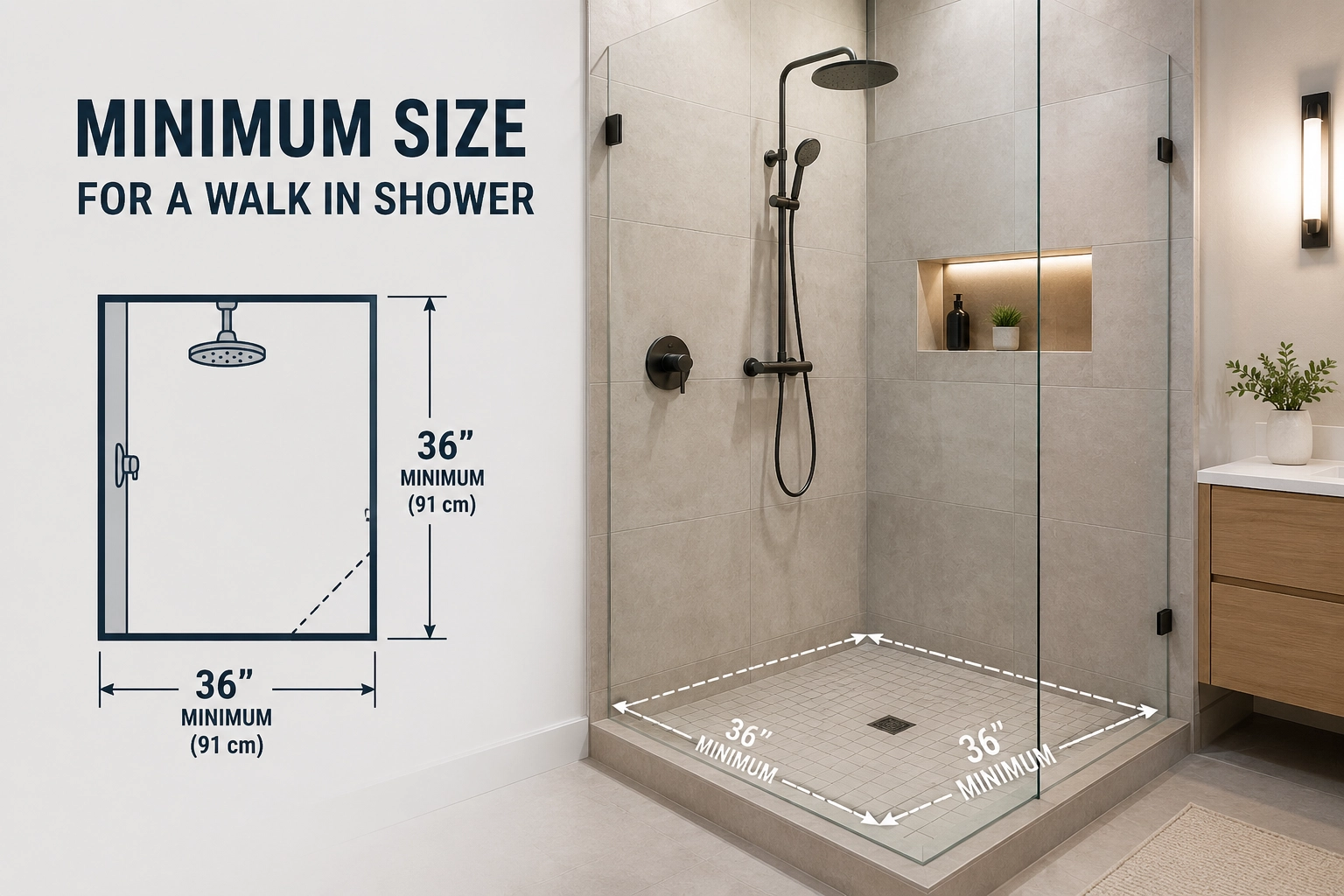
The minimum size for a walk in shower in Australia is usually around 900mm x 900mm, but this should be seen as the smallest workable size, not the most comfortable option.
900mm*900mm Common Models
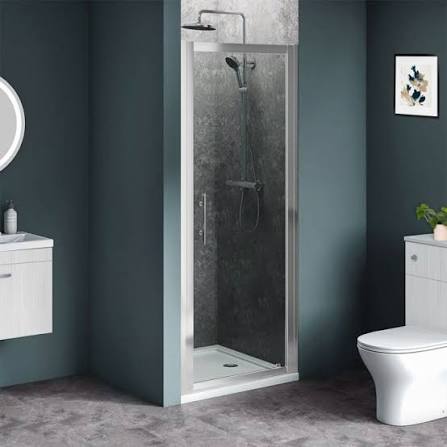
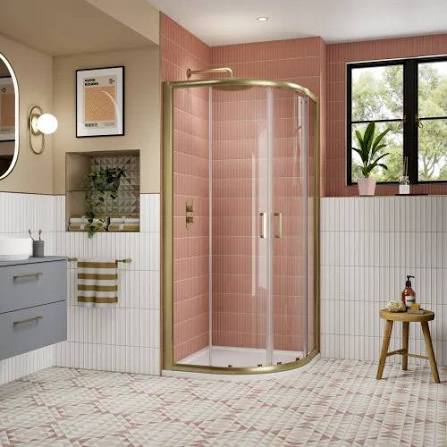
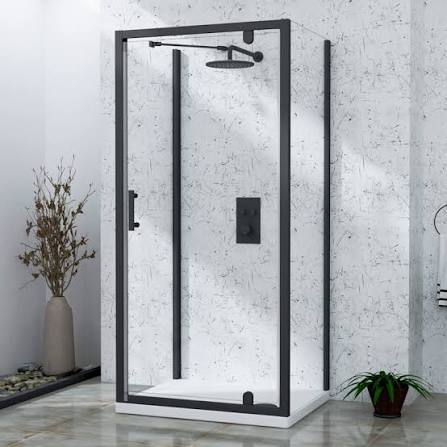
For most Melbourne homeowners, a more practical walk-in shower size starts from 1200mm x 900mm, because it gives better movement, better splash control and a more comfortable daily shower experience.
1200mm*900mm Common Models
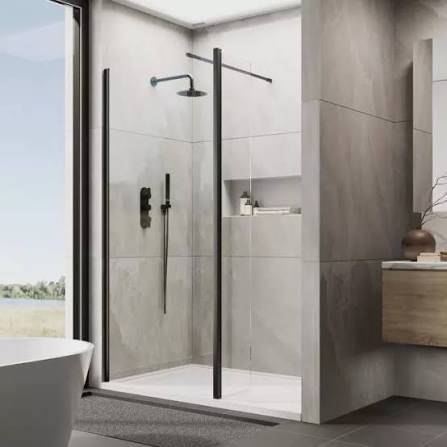
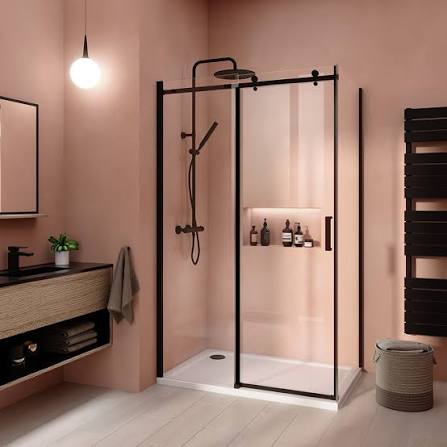
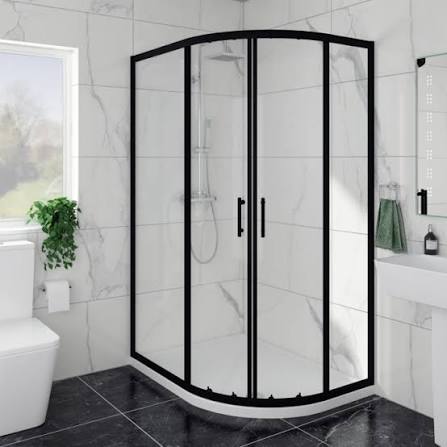
The final shower size should also be planned around the bathroom layout, shower screen length, drainage, waterproofing, entry clearance and who will use the shower every day.
| User Question / Need | Short Answer | Practical Explanation |
|---|---|---|
| What is the minimum size for a walk in shower? | Around 900mm x 900mm | This can work in very compact bathrooms, but it may feel tight and needs careful water control. |
| What is a comfortable walk-in shower size? | Around 1200mm x 900mm | This size gives more room to move and is usually better for everyday use. |
| What size is best for a small bathroom? | 900mm x 900mm or 1200mm x 800mm | An enclosed shower may suit very small spaces, while a compact walk-in shower needs smart screen placement. |
| What size is best for an ensuite? | 1000mm x 900mm to 1200mm x 900mm | This range works well for many Melbourne ensuites without taking too much space from the vanity or toilet. |
| What size feels more premium? | 1500mm x 900mm or larger | Larger walk-in showers feel more open and allow space for features like a rain shower, niche or bench. |
| What affects the final shower size? | Layout, screen, drainage and user comfort | The best size depends on the full bathroom plan, not just the shower footprint. |
| What is the main goal of this article? | To help you choose the right shower size | This guide explains standard shower dimensions, minimum sizes, walk-in shower planning and common layout mistakes. |
Common Shower Dimensions in Australian Bathrooms
In many Australian homes, the most common shower dimensions are 900mm x 900mm, 1000mm x 1000mm, 1200mm x 900mm and 1500mm x 900mm. These sizes suit different bathroom layouts, from small ensuites to larger family bathrooms.
A 900mm x 900mm shower is compact and practical, but not generous. A 1000mm x 1000mm shower feels more comfortable for daily use. A 1200mm x 900mm shower is often a good middle ground for walk-in designs because it gives more length for entry and splash control. A 1500mm x 900mm shower feels more open and suits larger renovations where the owner wants a modern, hotel-style bathroom.
900mm x 900mm Shower
A 900mm x 900mm shower is one of the most common sizes in Australia. It works well in small bathrooms and standard ensuites where space is limited. This size is usually better for enclosed showers with a door or screen because water is easier to contain.
For a walk-in shower, 900mm x 900mm is generally the lower end of practical sizing. It can work, but the design needs careful planning. If the shower is too open, water may splash onto the bathroom floor, especially if the shower head is powerful or poorly positioned.
1000mm x 1000mm Shower
A 1000mm x 1000mm shower gives a little more movement than a 900mm x 900mm layout. It can be a good option for homeowners who want a comfortable shower without taking too much floor space from the rest of the bathroom.
This size can work for semi-open or partly screened shower designs, but it still needs good drainage and proper falls in the floor. If you are planning a true walk-in shower with no door, you may still prefer a longer shape.
1200mm x 900mm Shower
A 1200mm x 900mm shower is one of the most practical choices for a walk-in shower. It gives enough width for comfortable use and enough length to help reduce water splash. This size also suits many Melbourne bathroom renovations because it feels modern without needing a very large room.
For most homeowners asking about the minimum size for a walk in shower, this is often the best realistic answer. A smaller shower may fit, but 1200mm x 900mm usually feels more usable and easier to maintain.
1500mm x 900mm Shower
A 1500mm x 900mm shower feels noticeably more spacious. It is suitable for master ensuites, larger family bathrooms and renovations where comfort is a priority. This size gives more room for a fixed glass panel, better entry clearance and more flexible shower head placement.
If the bathroom has enough space, this size can make the shower feel open without feeling exposed. It also gives more freedom to include a niche, rain shower, hand shower or bench, depending on the overall layout.
Minimum Shower Size Required in Australia
For a standard residential shower, 900mm x 900mm is commonly treated as a practical minimum size. This does not mean every bathroom should use this size. It simply means that, in many situations, it is the smallest size that can still function reasonably well for daily use.
For a walk-in shower, the more practical minimum is usually closer to 1200mm x 900mm. This is because walk-in showers rely on open access and fixed screens rather than fully enclosed doors. The more open the shower is, the more important it becomes to allow enough floor area for water control.
Different Types of Showers and Their Sizes
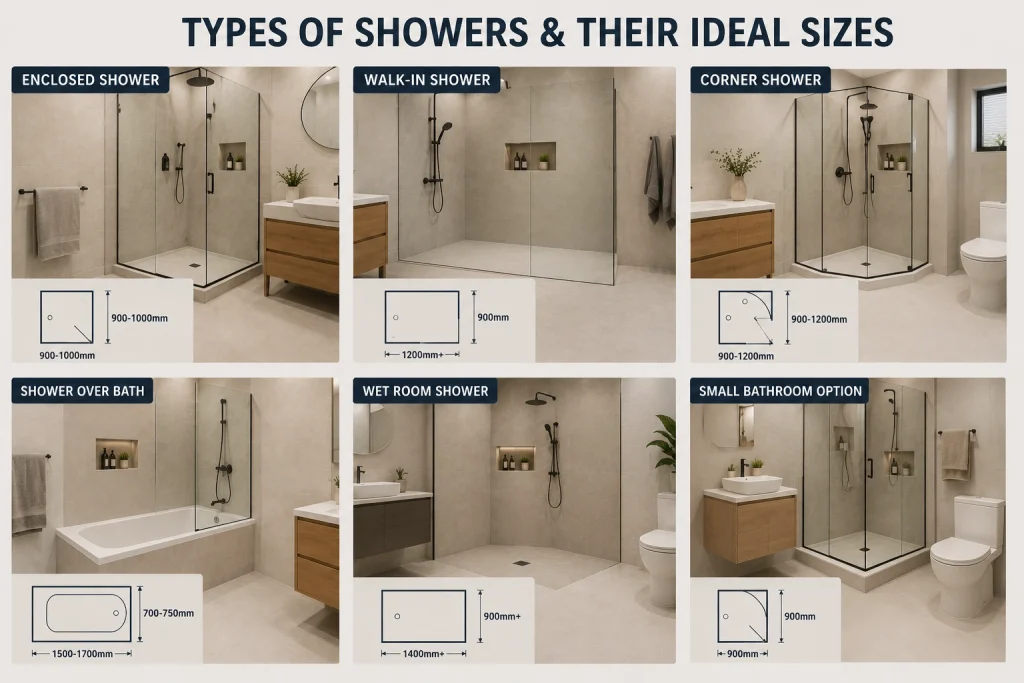
Different shower types need different amounts of space. A fully enclosed shower can usually be smaller because the screen and door keep water inside. A walk-in shower often needs more length because one side is open. A wet room needs the most careful planning because the shower area connects more directly with the rest of the bathroom floor.
Enclosed Shower
An enclosed shower usually works well in sizes such as 900mm x 900mm or 1000mm x 1000mm. It is a practical option for small bathrooms, ensuites and family homes because the door and screens help control water splash.
Walk-In Shower
A walk-in shower usually needs more space than an enclosed shower. The minimum size for a walk in shower can start around 900mm x 900mm, but 1200mm x 900mm is usually more comfortable and better for water control.
Corner Shower
A corner shower is useful in compact bathrooms because it uses two existing walls and saves floor space. Common sizes include 900mm x 900mm, 1000mm x 1000mm and 1200mm x 900mm.
Shower Over Bath
A shower over bath is a practical choice when the bathroom needs both a bath and a shower but does not have space for separate fixtures. It can work well for families, but it is not as easy to access as a level walk-in shower.
Wet Room Shower
A wet room shower creates a very open and modern look, but it needs excellent waterproofing, drainage and floor fall. If the floor is not planned properly, water can spread too far across the bathroom.
Standard Shower Size for Small Bathrooms
For small bathrooms, a shower size of 900mm x 900mm or 1000mm x 900mm is often the most realistic option. These sizes allow space for a vanity, toilet, door swing and walking clearance.
If you want a walk-in shower in a small bathroom, a rectangular layout such as 1200mm x 800mm or 1200mm x 900mm can work better than a square layout. The extra length gives the shower a more open feel and helps position the glass screen more effectively.
Best Shower Size for a Compact Bathroom
A good compact shower size is usually 900mm x 900mm for an enclosed design or 1200mm x 800mm for a compact walk-in design. The right choice depends on the shape of the room.
If the bathroom is narrow, a long shower along one wall may work better. If the bathroom is square, a corner shower may save more usable space.
Small Bathroom Layout Tip
In a small bathroom, avoid choosing a shower only because it fits on paper. You also need to think about how the door opens, where the vanity sits, how close the toilet is and whether there is enough room to dry yourself comfortably.
Glass can help a small bathroom feel larger, but it does not solve poor spacing. A tight walk-in shower can still feel awkward if the entry is too narrow or the splash zone is too close to the vanity.
Standard Shower Size for Ensuite Bathrooms
Ensuite bathrooms are often smaller than main bathrooms, so the shower needs to be carefully sized. Common ensuite shower sizes include 900mm x 900mm, 1000mm x 900mm and 1200mm x 900mm.
For a Melbourne ensuite renovation, a 1200mm x 900mm walk-in shower is often a strong choice if the room allows it. It gives the ensuite a more modern feel while still leaving room for a vanity and toilet.
Compact Ensuite Shower
A compact ensuite may only have room for a 900mm x 900mm shower. In this case, an enclosed shower may work better than a fully open walk-in design.
If you still want a walk-in style, consider a fixed glass panel, wall-mounted fittings and a carefully positioned shower head to reduce splash.
Luxury Ensuite Shower
A luxury ensuite may use a shower size of 1500mm x 900mm, 1600mm x 1000mm or larger. These sizes can support double showers, built-in niches, bench seating or a larger fixed screen.
The key is balance. A large shower looks impressive, but it should not make the vanity, toilet or circulation space feel cramped.
Walk-In Shower Size Standards
Walk-in showers are popular because they look modern, feel open and are easier to access than many traditional shower enclosures. However, they need more planning than a basic shower cubicle.
The most practical walk-in shower sizes usually start at 1200mm x 900mm. A 900mm x 900mm walk-in shower is possible, but it is more likely to feel tight and may create splash issues. Recent Australian bathroom sizing guides commonly describe 1200mm x 900mm as a better recommended size for walk-in showers, while larger options provide more comfort and better water control.
| Walk-In Shower Size | Best For | Practical Note |
| 900mm x 900mm | Very small bathrooms | This is the minimum workable size, but it may feel tight and needs careful splash control. |
| 1000mm x 900mm | Compact ensuites | A little more practical than 900mm x 900mm, but still needs good screen placement. |
| 1200mm x 900mm | Most standard walk-in showers | This is a strong everyday choice for comfort, movement and water control. |
| 1500mm x 900mm | Larger bathrooms and master ensuites | Gives a more open feel and allows better glass panel placement. |
| 1600mm x 1000mm or larger | Luxury bathrooms | Suitable for premium layouts, larger fittings, niches or bench seating. |
Minimum Size for a Walk-In Shower
The minimum size for a walk in shower is usually around 900mm x 900mm, but this should be treated as the smallest workable footprint, not the ideal size. For most homes, 1200mm x 900mm is a safer and more comfortable choice.
If the shower has no door, no hob and only a short glass panel, the design may need more space. Water movement becomes a bigger issue when the shower is open.
Comfortable Walk-In Shower Size
A comfortable walk-in shower size is usually 1200mm to 1500mm long and 900mm to 1000mm deep. This gives enough room to stand, turn, wash and enter without feeling restricted.
For tall users, families or homeowners planning to age in place, a larger shower is usually worth considering. It can improve comfort now and make the bathroom more practical in the future.
Large Walk-In Shower Size
A large walk-in shower may be 1600mm x 1000mm, 1800mm x 1000mm or bigger. These sizes are common in luxury bathroom renovations.
Large showers need good heating, ventilation and drainage. If the area is too open, it may feel cold in winter or allow water to travel too far across the floor.
Shower Screen Size and Clearance Requirements
The shower screen plays a major role in how well a walk-in shower works. A fixed glass panel helps control splash while keeping the bathroom open and modern.
For many walk-in showers, a fixed panel between 900mm and 1200mm long is common, depending on the shower size. The entry opening should be wide enough to move through comfortably, but not so wide that water escapes easily.
Shower Entry Width
A comfortable shower entry is often around 600mm to 700mm wide. Smaller openings may feel awkward, especially for larger users or anyone with mobility concerns.
If the shower is designed for future accessibility, the entry may need to be wider and step-free. This should be planned with a qualified designer or builder.
Glass Panel Length
The glass panel should be long enough to reduce splash from the shower head. In many cases, a 900mm panel is a practical minimum for a walk-in shower, while 1000mm to 1200mm can provide better control.
The shower head should not spray directly toward the opening. If the shower head points toward the open entry, even a large shower may still create water problems.
Clearance Outside the Shower
The area outside the shower should allow comfortable movement. You need enough room to enter, exit, dry off and access nearby fixtures.
Avoid placing a toilet, vanity or towel rail too close to the shower opening. This can make the bathroom feel cramped and may expose nearby surfaces to regular moisture.
Shower Base Sizes in Australia
Common shower base sizes in Australia include 900mm x 900mm, 1000mm x 1000mm, 1200mm x 900mm and 1500mm x 900mm. The best size depends on whether the shower is enclosed, semi-open or fully walk-in.
A prefabricated shower base can be a simple and practical option because it comes in standard sizes and usually has a built-in slope toward the drain. A tiled shower base gives more design flexibility and is often used for modern walk-in showers, but it must be waterproofed and installed correctly to avoid pooling or leaks.
Accessible Shower Size Requirements
Accessible shower design needs more space and planning than a standard shower. It is not only about the shower size; it also includes entry width, safe flooring, grab rail position, shower controls, drainage and enough room for movement.
For accessible or future-friendly bathrooms, a standard 900mm x 900mm shower may feel too small. A larger level-entry walk-in shower is usually a better choice, especially for older users, wheelchair users or anyone with limited mobility.
Even if full accessibility is not needed now, planning a slightly larger shower can make the bathroom easier to use in the future. Features such as a handheld shower, non-slip tiles, wider entry and reinforced walls for future grab rails can make the space safer without making it look clinical.
Factors That Affect Shower Size
The right shower size depends on more than the available wall length. You need to consider the full bathroom layout, water control, user comfort, drainage, cleaning and long-term practicality.
A shower that looks good on a floor plan may not work well in daily use if the entry is too tight, the screen is too short or the shower head causes water to splash across the floor.
Bathroom Size
The overall bathroom size is the first factor. A large bathroom can support a bigger walk-in shower, while a small bathroom may need a compact enclosed shower.
In small bathrooms, every millimetre matters. Making the shower too large can reduce vanity space, toilet clearance and walking room.
Bathroom Layout
The position of the door, window, toilet, vanity and plumbing affects the shower size. A long wall may be ideal for a walk-in shower, while a corner may suit an enclosed shower better.
In Melbourne homes, older bathrooms often have awkward layouts. Moving plumbing may improve the final design, but it can also increase renovation costs.
Shower Head Position
The shower head should be positioned to reduce splash. In a walk-in shower, it is usually better to direct water away from the open entry.
Rain shower heads, wall-mounted heads and hand showers all behave differently. A strong shower head in a small open shower can send water much further than expected.
Drainage and Floor Fall
Drainage is critical in walk-in showers. The floor needs to fall correctly toward the waste so water does not pool or spread across the bathroom.
Australian wet-area construction guidance requires careful waterproofing and drainage in shower areas. NCC Housing Provisions include requirements for shower walls to be waterproofed to at least 1800mm, and unenclosed showers need specific attention to the defined shower area and water control.
User Comfort
A shower should suit the people who use it every day. A compact shower may be fine for one person but uncomfortable for a family, taller users or anyone who needs more movement.
If the bathroom is being renovated for resale, a comfortable shower size can make the home feel more practical and modern.
Shower Size by Bathroom Layout
Different bathroom layouts need different shower sizes. The right choice depends on the room shape, fixture position, door swing, plumbing points and how much open space is needed around the shower.
Narrow Bathroom Layout
In a narrow bathroom, a longer shower along one wall often works better than a square shower. Sizes such as 1200mm x 800mm or 1500mm x 800mm can help save floor space while still creating a practical walk-in layout.
Square Bathroom Layout
In a square bathroom, a corner shower can be a smart choice because it keeps the centre of the room more open. A 900mm x 900mm or 1000mm x 1000mm shower can work well if the bathroom is compact.
Ensuite Layout
In an ensuite, the shower needs to fit comfortably with the toilet and vanity. A 900mm x 900mm shower may work in a small ensuite, while 1200mm x 900mm is better if you want a more open walk-in shower.
Family Bathroom Layout
A family bathroom should be practical, easy to clean and good at controlling water. A shower size of 1000mm x 1000mm or 1200mm x 900mm is often a good choice for daily use.
Luxury Bathroom Layout
A luxury bathroom can support larger walk-in showers such as 1500mm x 900mm, 1600mm x 1000mm or more. These sizes allow space for features like a rain shower, wall niche, bench seat or fixed glass panel.
Common Mistakes When Choosing a Shower Size
Choosing the wrong shower size can make a new bathroom less comfortable, harder to clean and more expensive to fix later. These are the most common mistakes homeowners should avoid:
- Choosing 900mm x 900mm for a walk-in shower without considering splash.
- Making the shower too large and reducing usable space around the vanity or toilet.
- Forgetting to allow enough entry width.
- Using a glass panel that is too short for the shower head position.
- Placing the shower head so it sprays toward the open entry.
- Ignoring floor fall and drainage requirements.
- Choosing a trendy wet-room design without understanding waterproofing needs.
- Forgetting towel access and drying space outside the shower.
- Not considering future mobility needs.
- Assuming all shower sizes feel the same in daily use.
How to Choose the Right Shower Size
The best shower size is the one that fits your bathroom, suits your household and works properly after installation. For most Melbourne homeowners, the practical starting point is to decide whether the shower will be enclosed, semi-open or fully walk-in.
If you want a walk-in shower, aim for at least 1200mm x 900mm where possible. If your bathroom is very tight, a smaller shower may still work, but it needs better design control.
Measure the Full Bathroom First
Start by measuring the full bathroom, not just the shower area. Include the door, window, vanity, toilet, existing plumbing and walking space.
This helps you understand whether a larger shower will improve the bathroom or make it feel cramped.
Decide Between Enclosed and Walk-In
If your bathroom is small, an enclosed shower may be more practical. It can control water better and fit into a smaller footprint.
If you have more room, a walk-in shower can make the bathroom feel larger, brighter and more modern.
Think About Splash Control
Splash control is one of the biggest issues in walk-in shower design. A larger shower, longer screen and better shower head position can all help.
If you are unsure, choose a slightly larger shower or a more enclosed screen design. It is usually easier to make a shower feel open with clear glass than to fix water spreading across the floor.
Plan Drainage Early
Drainage should be planned before tiles, screens and fixtures are chosen. The waste position, floor fall and waterproofing system all affect how well the shower works.
This is especially important for level-entry and wet-room style showers.
Choose Comfort Over the Absolute Minimum
The minimum size for a walk in shower may technically fit into your bathroom, but the smallest option is not always the best option. A slightly larger shower can improve comfort, cleaning and long-term value.
If you have the space, 1200mm x 900mm is a strong practical choice. If you want a more spacious feel, consider 1500mm x 900mm or larger.
Final Thoughts
The minimum size for a walk in shower is usually around 900mm x 900mm, but that should be seen as the smallest workable size rather than the most comfortable option. For most Melbourne homeowners, 1200mm x 900mm is a better practical starting point because it gives more room to move and helps reduce water splash.
A good shower design is not only about dimensions. It should also consider screen length, entry width, drainage, waterproofing, fixture position, bathroom layout and future usability. If you are renovating a Melbourne bathroom, the right shower size should make the room feel easier to use every day, not just look better in photos.